
Forum rules
Oekaki posts must follow our Rules for the Site and Forum,
including the Oekaki Rules and Art Rules.
Having trouble using oekaki? Check out the Oekaki Guide or send in a help ticket.
Oekaki posts must follow our Rules for the Site and Forum,
including the Oekaki Rules and Art Rules.
Having trouble using oekaki? Check out the Oekaki Guide or send in a help ticket.
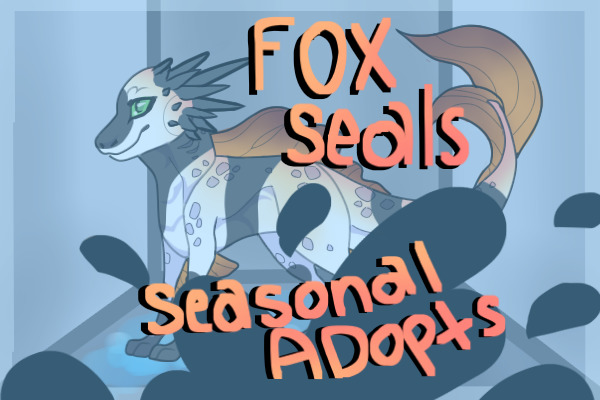
Fox Seals- A Seasonal Adopt by Bean_Cake
| Artist | Bean_Cake [gallery] |
| Time spent | 12 hours, 9 minutes |
| Drawing sessions | 7 |
| 25 people like this | Log in to vote for this drawing |


27 posts
• Page 1 of 3 • 1, 2, 3
Fox Seals- A Seasonal Adopt
 by Bean_Cake » Sat Jun 09, 2018 12:13 pm

========================================================================================

7/30/22:
The Fox Seal 2022 Summer Event has begun! Keep an eye out for limited time Adopts!
6/1/22:
Welcome back everyone! Fox Seals have been migrating once more and the center has reopened, helping to rehabilitate injured Fox Seals and release them back into the wild. During this time there are also Seals being rescued that are placed up for adoption, so keep an eye out for New Fox Seals!
(NEW!)
New 2022 line update!
New Stamps have been added!
New Gift lines are available to owners!
The Archives have been updated!
========================================================================================

- Code: Select all
[url=https://www.chickensmoothie.com/Forum/viewtopic.php?f=52&t=3831182][img]https://i.imgur.com/jZXJ0Pb.png[/img][/url]

- Code: Select all
[url=https://www.chickensmoothie.com/Forum/viewtopic.php?f=52&t=3831182][img]https://www.chickensmoothie.com/oekaki/image/image.php?id=3869908&size=large&format=png&rev=1624554023[/img][/url]

- Code: Select all
[url=https://www.chickensmoothie.com/Forum/viewtopic.php?f=52&t=3831182][img]https://www.chickensmoothie.com/oekaki/image/image.php?id=3334796&size=large&format=png&rev=1655262625[/img][/url]
========================================================================================
The Migration is Coming!
As the summer months begin and days become longer, the ocean waters become warm and full of life. During this time a new species of aquatic canines are spotted off thousands of coast lines around the world! Unlike other aquatic canine species that have surfaced before, the Fox Seals can only be seen and tracked during the summer months when they start their migrations to their breeding grounds. Fox Seals start their migration from their homes (normally found scattered on the sea bed or groups in southern seas) and travel north into the cool waters to fest on the abundance of life and breed. The migrations often occurs from early June and last until the last day of August. During this time however, Fox Seals are often found woundering alone on the shore if they get separated from their pack or injured by a predator. Although they can live in both water and on land, it can expose them to further dangers.
Here at the Fox Seal Rescue Center, We find and rescue Fox Seals that have been injured or lost and help rehabilitation them back into the wild. However, with the rising increase in the Fox Seal population and after spending lots of time studying them we are now letting everyone adopt a Fox Seal of their very own. We do ask a fee for adoption, to ensure that Each Fox Seal goes to a good and proper home.
========================================================================================
Rules
✹ These are Seasonal Adopts (Open June - August 31st)
✹ These not first come, first served
✹ Fox Seals are NOT FREE
✹ You may adopt as many Fox Seals as you'd like
✹ No Customs (only given out on occasion)
✹ No open staff spots
✹ Don't steal the species or create your own
✹ Adoption center closes August 31st
How Much is a Fox Seal?
Normal Adopts-
✹ 1 Rare pet (WL or Non-WL, Any year)
✹ 10 WL Items
✹ 10 C$
✹ 5 Summer Tokens (when event is going on)
✹ Name your price
Custom Adopts-
✹ 20 C$ (Only available during the annual Fox Seal Summer event)
========================================================================================
🔷 Open For Adoption 🔷
None Yet! Keep an eye out for new Fox Seals each Week!
Last edited by Bean_Cake on Sat Jul 30, 2022 4:33 pm, edited 61 times in total.
-
Bean_Cake - Posts: 2923
- Joined: Mon May 25, 2015 5:49 pm
- My pets
- My items
- My wishlist
- My gallery
- My scenes
- My dressups
- Trade with me
Fox Seals- A Seasonal Adopt
by Bean_Cake » Sat Jun 09, 2018 12:13 pm
What Are Fox Seals?
 🔷Physical Looks
 🔷Diet
🔷Diet
 🔷Breeding
 🔷Relationships
 🔷Rarities

Fox Seals are an aquatic canine-like species that can live without issues in both water and on land. They Have slippery seal-like skin that is very slick and well oiled, when on land their skin becomes dry and scaly much like reptile skin. They have a set of gills on each side of their neck that they can use to breath under water for days at a time, when on land their gills close and their lungs adapt to the air. Fox Seals are shy creatures in the wild and you'd be luck to see one up close, however those rescued from the center are friendly and playful- perfect companions.
 🔷Physical Looks
Adult Fox Seals are about the size of an average red fox when fully grown, males tend to be a bit bigger or bulky compared to the females who are bit more agile and lean. In water their skin is smooth and oily, when on land their skin becomes dry and rough like reptile skin. They have gills located on each side of their neck that allow them to breath underwater for days at a time, when on land their gills close up and their lungs adapt to the air. They have sharp shark-like eyes that allow them to see in the murkiest of waters, rarer Fox Seals that live deeper in the oceans can even see in complete darkness. They have fins on their bodies located on their back, elbows and tails. Fox Seals can also develop other mutations such as horns or "ears". Based on their environment Fox Seals can range in pattern from bright and colorful, all natural or dark.
 🔷Diet
🔷DietAs you can imagine, Fox Seals eat mostly fish. Most are carnivores and predators who hunt; fish, squid, crabs, lobsters, shrimp, clams and other fish. Others have been known to eat; seaweed, kelp, barnicals and some species of coral. However, domesticated Fox Seals have been known to eat a verity of other foods such as chicken or berries. Each has a different taste and will like different foods.
 🔷Breeding
Once the migration has begun, it's during this time the Fox Seals gather in masses all over northern shore lines to find a mate and breed. Fox seals "sing" out to each other, a high pitched called much like that of a leopard seal. Males do most of the singing to attract females, if one likes his song they will mate for life. These "soul mates" will travel together each year to the same spot to breed. Other times, males may use their horns to clash and fight for a female.
Fox Seals can have anywhere from 1-3 eggs every migration, laid in shark-like egg sacks. The eggs are left nuzzled safely in seaweed forests until they hatch in August and join their family or pack. Babies are fully grown by the fallowing migration and may or may not travel with their family groups.
 🔷Relationships
Fox Seals live and travel in packs of 2-10 normally, this often consists of; an alpha male & female, a beta and younglings. This pack makes up a small family that travel together for protection from whales or sharks. Some Fox Seals have been known to live in small groups but hardly ever live on their own. They are very close with their pack and families and often friendly to other Fox Seals even if they don't know them. When domesticated, Fox Seals are as friendly and playful as dogs and love to build connections with their owners.
 🔷Rarities
Fox Seals have 3 main rarities; Common, Uncommon & Rare. A Fox Seal's rarity is based off of how deep in the ocean they live and the types of fins they have. The further the depth, the rarer the Fox Seal. This is because it is rarer to see Fox Seals from the deeper parts of the ocean. There is also lore about Ver Rare Fox Seals that have yet to be encountered, so far they are unknown.
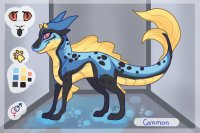
Common Fox Seals live in the shallows of our oceans, coal reefs and sandy gulfs. They have fish fins and are more often colorful. They eat small fish, starfish, eles, seaweed, some species of coral and anything else they can catch. They often make their homes in the reef and their prediters included sharks.
Uncommon Fox Seals live in the twilight zone of our oceans, a place with very little light. They have solid fins and are more often dark or neutral in color. They eat crabs, lobsters, shrimp, squids and anything else they can catch. They often make their homes in this dark area and their prediters included large sharks and whales.
Rare Fox Seals live in the blackout zone of our oceans, a place with absolutely no light. They have sharp, hard fins and are more often dark with a hint of neon. They eat
Jellyfish, squid and anything else they can catch. They often make their homes in this dark area and their prediters included unknown.
Very Rare Fox Seals are still unknown and have yet to be seen.
🔷Mutations
Common:
Guppy fins, fish fins, fish fins 2 (NEW!)
Small horns, medium horns
Fin ears (2), spikes
Uncommon:
Dolphin fins, shark fins, sting Ray fins (NEW!)
Long horns, ram horns, small Deer horns (NEW!)
Fin ears (3), thin ears
Rare:
Whale fins, deep-sea fish fins
Large deer horns, custom horns
Aqua ears (NEW!), Custom ears
========================================================================================
Giftlines::
Here is a complete list of all Fox Seal gift lines! If you create Fox Seal Gift lines, please PM me so I can add them to this list.
Here is a complete list of all Fox Seal gift lines! If you create Fox Seal Gift lines, please PM me so I can add them to this list.
Summer of 2018 By Bean_Cake
========================================================================================
Affiliations::
Don't be afraid to ask! Always seeking!
Don't be afraid to ask! Always seeking!

========================================================================================
Last edited by Bean_Cake on Thu Jun 23, 2022 9:09 am, edited 33 times in total.
-
Bean_Cake - Posts: 2923
- Joined: Mon May 25, 2015 5:49 pm
- My pets
- My items
- My wishlist
- My gallery
- My scenes
- My dressups
- Trade with me


-

Ringo. - Posts: 13110
- Joined: Sat Apr 07, 2018 5:21 am
- My pets
- My items
- My wishlist
- My gallery
- My scenes
- My dressups
- Trade with me
Re: Fox Seals- A Seasonal Adopt
by TheSongOfTheStars » Sat Jun 09, 2018 12:14 pm
Mark


Hello
XXXXXXXXXXXXXXXXXXXXXXXXXXXXXXXXXXXXXXXXXXXXXXXXXXXX
If crediting me for art/character design then please use TheSongOfTheStars on Toyhou.se
or FiveSecondsToFly on deviantart for anywhere else[
click images for credits ♠
XXXXXXXXXXXXXXXXXXXXXXXXXXXXXXXXXXXXXXXXXXXXXXXXXXXX
XXXXXXXXXXXXXXXXXXXXXXXXXXXXXXXXXXXXXXXXXXXXXXXXXXXX
If crediting me for art/character design then please use TheSongOfTheStars on Toyhou.se
or FiveSecondsToFly on deviantart for anywhere else[
click images for credits ♠
XXXXXXXXXXXXXXXXXXXXXXXXXXXXXXXXXXXXXXXXXXXXXXXXXXXX
-

TheSongOfTheStars - Posts: 21063
- Joined: Thu Jun 26, 2014 12:51 pm
- My pets
- My items
- My wishlist
- My gallery
- My scenes
- My dressups
- Trade with me























-

Caspian Skies - Posts: 1806
- Joined: Sun May 31, 2015 10:56 am
- My pets
- My items
- My wishlist
- My gallery
- My scenes
- My dressups
- Trade with me
Re: Fox Seals- A Seasonal Adopt
by butter-milk » Sat Jun 09, 2018 12:30 pm
defo mark grill


♡welcome♡
i'm juno!! ❀ he/him ❀ butch
✰⋆ critters + studio ghibli + antiques + alex g ✰⋆
-
butter-milk - Posts: 603
- Joined: Fri Dec 22, 2017 3:03 am
- My pets
- My items
- My wishlist
- My gallery
- My scenes
- My dressups
- Trade with me


-

Avisowl - Posts: 3111
- Joined: Wed Jun 28, 2017 1:41 am
- My pets
- My items
- My wishlist
- My gallery
- My scenes
- My dressups
- Trade with me



-
Bean_Cake - Posts: 2923
- Joined: Mon May 25, 2015 5:49 pm
- My pets
- My items
- My wishlist
- My gallery
- My scenes
- My dressups
- Trade with me
Re: Fox Seals- A Seasonal Adopt
by Bean_Cake » Mon Jun 11, 2018 12:21 pm

There are more Fox Seals being made and a few currently up for adoption

-
Bean_Cake - Posts: 2923
- Joined: Mon May 25, 2015 5:49 pm
- My pets
- My items
- My wishlist
- My gallery
- My scenes
- My dressups
- Trade with me
Re: Fox Seals- A Seasonal Adopt
by Senbonzakura » Mon Jun 11, 2018 1:04 pm
Mark
May Vallerians be an affiliate?

May Vallerians be an affiliate?
- Code: Select all
[url=https://www.chickensmoothie.com/Forum/viewtopic.php?f=52&t=3826305][img]https://i.imgur.com/1Tyeb8T.png[/img][/url]


"I was staring through the cage of those meticulous ink-strokes at an absolute beauty" -Salieri (Amadeus)

-

Senbonzakura - Posts: 11501
- Joined: Sat Jun 24, 2017 2:49 pm
- My pets
- My items
- My wishlist
- My gallery
- My scenes
- My dressups
- Trade with me
27 posts
• Page 1 of 3 • 1, 2, 3
Who is online
Users browsing this forum: Larkspur1678, Leaftea and 2 guests