
{ Atlantean Adopts } Closed.
Forum rules
These adoptables are not official CS pets and cannot be added to your CS account.
Art theft is not tolerated here. Do not copy/trace/edit/use anybody's pictures without their express permission.
If you are unsure, read the full art rules here.
Once-off adoptables belong in Character Sales and Design Shops: Forum/viewforum.php?f=69
These adoptables are not official CS pets and cannot be added to your CS account.
Art theft is not tolerated here. Do not copy/trace/edit/use anybody's pictures without their express permission.
If you are unsure, read the full art rules here.
Once-off adoptables belong in Character Sales and Design Shops: Forum/viewforum.php?f=69
{ Atlantean Adopts } Closed.
 by vee. » Sat Aug 11, 2012 6:35 am
A D O P T I O N S . C L O S E D ~ C U S T O M S . C L O S E D ~ E V E N T S . C L O S E D ~ C O N T E S T S . C L O S E D
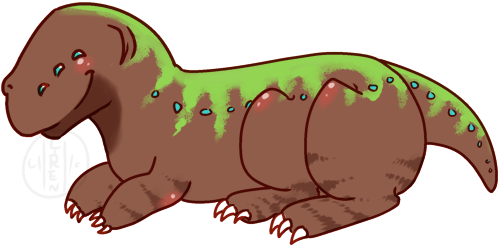
W E L C O M E !
Mo wrote:Hello there, and welcome to the Atlantean Adoption page! My name is Mo, I'm the thread mascot! It's great to meet you!
Due to lack of interest, this thread is actually closed to the general public, and no new Atlanteans will be made except upon request, or to friends of the staff members.
O T H E R . U S E F U L . L I N K S ;
S T A F F ;
Vellamore; Thread owner, species creator, artist.
Backseatpanda; Moderator, artist.
tennisbutt; Guest artist.
Currently we are not looking for new artists or mods, but this may change once the site gets running! Check back later.
Backseatpanda; Moderator, artist.
tennisbutt; Guest artist.
Currently we are not looking for new artists or mods, but this may change once the site gets running! Check back later.
R U L E S ;
1. Do not take a creature that is not yours! You must follow adoption procedure to own one.
2. Respect the staff as well as anyone who posts here! Bad manners will get you blacklisted.
3. Do not spam the thread! Spam is considered as whining, complaining, or posting things for no reason. It is okay to post a compliment or bookmark the thread, but don't post things that you know aren't important.
4. PM any questions directly to Vellamore, no matter how small! It may be added to the FAQ for future reference.
5. Editing adoption forms is not allowed unless stated otherwise. Mistakes are okay! Any edited form will be disqualified.
6. Three strikes and you're out! You will be given three polite warnings if you break any of the above rules, and after that, you will be blacklisted either temporarily or permanently depending on what you did wrong.
7. These creatures cannot be your fursona or fursona's mate or anything. You may of course use them as regular characters.
2. Respect the staff as well as anyone who posts here! Bad manners will get you blacklisted.
3. Do not spam the thread! Spam is considered as whining, complaining, or posting things for no reason. It is okay to post a compliment or bookmark the thread, but don't post things that you know aren't important.
4. PM any questions directly to Vellamore, no matter how small! It may be added to the FAQ for future reference.
5. Editing adoption forms is not allowed unless stated otherwise. Mistakes are okay! Any edited form will be disqualified.
6. Three strikes and you're out! You will be given three polite warnings if you break any of the above rules, and after that, you will be blacklisted either temporarily or permanently depending on what you did wrong.
7. These creatures cannot be your fursona or fursona's mate or anything. You may of course use them as regular characters.
F A Q ;
Please read through these questions and answers before you ask anything, in case your question is already answered here! If it isn't, send a PM to Vellamore and she will help you!
Who owns these species?
Vellamore is the creator of the Atlantean Salamander and the Atlantean Armadillo species and they are copyrighted to her.
Can I make my own?
No, you may not. Only artists are permitted to make their own. However, you can order customs when they are open.
When will the next batch be released?
Batches will be released at random, as they are completed. There is no set schedule, and we will try to post them at varying times to give everyone a chance!
Are the adoptables free?
Most of them are. You will usually have to answer a question relating to the thread or to the staff members in the form to verify that you read everything, though! Sometimes, there will be writing or drawing competitions for a creature, and other times, special ones may be purchased with CS pets or items.
How do you decide who gets each design?
Normally, they will be first come, first serve-- to the first person to fill out the form correctly. Sometimes, the forms will ask you to fill in some information about the creature you are adopting, and staff members will choose the ones they like. And other times still, there will be special openings for people who do not yet have one. This way, we can be sure that everyone has a fair chance to get one :D
During special events, can I make forms for two different creatures?
You can enter as many special events or contests as you want at one time! During regular adoptions, you are only allowed to post one form, but for example, during our holiday events, you are permitted to post multiple forms.
What if I don't want my creature anymore?
You may PM a staff member and they will put your creature in the pound. You are not permitted to resell them or give them away.
How do I become a Guest Artist?
Every now and again, Vellamore will post a form in the Events/Contests section of the thread which you may fill out and PM to her. She will choose based on your designing abilities.
Can Guest Artists create their own customs?
Yes, Guest Artists are permitted to make ONE custom for themselves if they do not already own one, and design three to be put up for adoption.
What am I allowed to do with my creature?
Anything you want! Give it a gender and a name, unless one is already assigned to it, give it a personality, some accessories if you want, order art of it, draw it yourself, roleplay with it, anything! You are permitted to use it on other websites as long as credit is given; link back here if you can!
What am I NOT allowed to do with my creature?
You may not claim credit for the design or the species (unless it's an artist custom or a guest artist custom), steal someone else's creature, change its design, or sell it.
Are they breedable?
Yes, breeding options have just been released. See the Breeding Center for information, at the bottom of this page (:
Could I breed my Salamander with an Armadillo? What would happen?
No, Salamanders and Armadillos are not interbreedable and would not produce an egg. They are completely separate species, so their genes don't quite match up.
How many creatures am I allowed to have?
Currently, there is no limit. We would prefer that you not post an adoption form every single time a litter is released if you already have some, though, just to give others a chance to get one!
Am I allowed to make the image smaller so it fits in my signature?
Sure, you can resize them if you want! As long as the image isn't altered, that's totally fine (:
Can we be affiliates?
Sure! PM me your banner or stamp or thread link and I'll add it in the affiliates post (:
Who owns these species?
Vellamore is the creator of the Atlantean Salamander and the Atlantean Armadillo species and they are copyrighted to her.
Can I make my own?
No, you may not. Only artists are permitted to make their own. However, you can order customs when they are open.
When will the next batch be released?
Batches will be released at random, as they are completed. There is no set schedule, and we will try to post them at varying times to give everyone a chance!
Are the adoptables free?
Most of them are. You will usually have to answer a question relating to the thread or to the staff members in the form to verify that you read everything, though! Sometimes, there will be writing or drawing competitions for a creature, and other times, special ones may be purchased with CS pets or items.
How do you decide who gets each design?
Normally, they will be first come, first serve-- to the first person to fill out the form correctly. Sometimes, the forms will ask you to fill in some information about the creature you are adopting, and staff members will choose the ones they like. And other times still, there will be special openings for people who do not yet have one. This way, we can be sure that everyone has a fair chance to get one :D
During special events, can I make forms for two different creatures?
You can enter as many special events or contests as you want at one time! During regular adoptions, you are only allowed to post one form, but for example, during our holiday events, you are permitted to post multiple forms.
What if I don't want my creature anymore?
You may PM a staff member and they will put your creature in the pound. You are not permitted to resell them or give them away.
How do I become a Guest Artist?
Every now and again, Vellamore will post a form in the Events/Contests section of the thread which you may fill out and PM to her. She will choose based on your designing abilities.
Can Guest Artists create their own customs?
Yes, Guest Artists are permitted to make ONE custom for themselves if they do not already own one, and design three to be put up for adoption.
What am I allowed to do with my creature?
Anything you want! Give it a gender and a name, unless one is already assigned to it, give it a personality, some accessories if you want, order art of it, draw it yourself, roleplay with it, anything! You are permitted to use it on other websites as long as credit is given; link back here if you can!
What am I NOT allowed to do with my creature?
You may not claim credit for the design or the species (unless it's an artist custom or a guest artist custom), steal someone else's creature, change its design, or sell it.
Are they breedable?
Yes, breeding options have just been released. See the Breeding Center for information, at the bottom of this page (:
Could I breed my Salamander with an Armadillo? What would happen?
No, Salamanders and Armadillos are not interbreedable and would not produce an egg. They are completely separate species, so their genes don't quite match up.
How many creatures am I allowed to have?
Currently, there is no limit. We would prefer that you not post an adoption form every single time a litter is released if you already have some, though, just to give others a chance to get one!
Am I allowed to make the image smaller so it fits in my signature?
Sure, you can resize them if you want! As long as the image isn't altered, that's totally fine (:
Can we be affiliates?
Sure! PM me your banner or stamp or thread link and I'll add it in the affiliates post (:
Last edited by vee. on Sat Mar 02, 2013 4:15 pm, edited 67 times in total.
-

vee. - Posts: 3227
- Joined: Fri Aug 01, 2008 8:45 am
- My pets
- My items
- My wishlist
- My gallery
- My scenes
- My dressups
- Trade with me
{ S P E C I E S . I N F O }
by vee. » Sat Aug 11, 2012 6:36 am
Everyone knows the story of Atlantis—“in a single day and night of misfortune, the island of Atlantis disappeared into the depths of the sea.” It was a place of intelligence, beauty, and tradition, and has been long gone for thousands of years, along with its history and stories.
Its pets, however, are doing quite well for themselves.
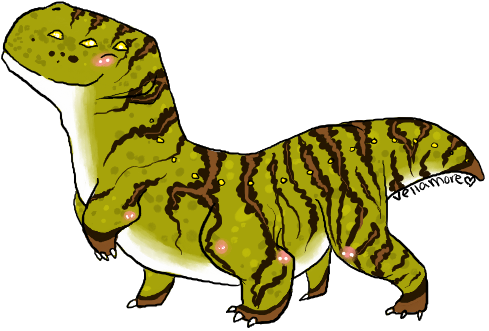
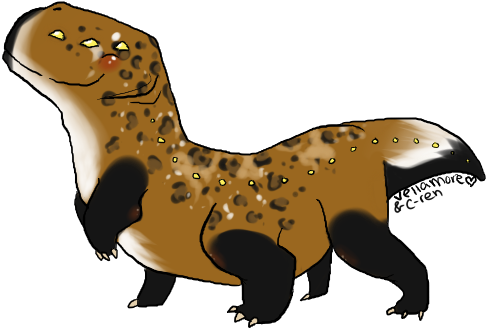
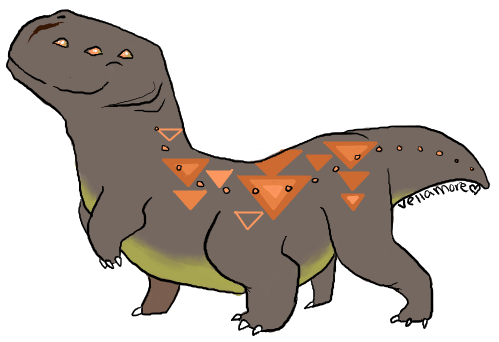
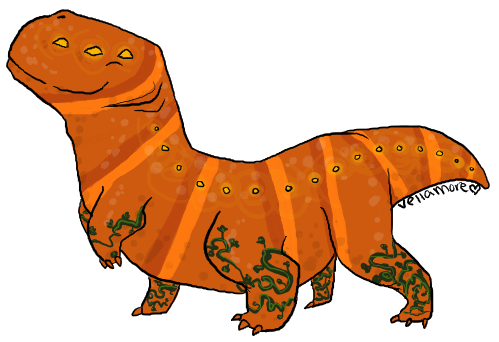
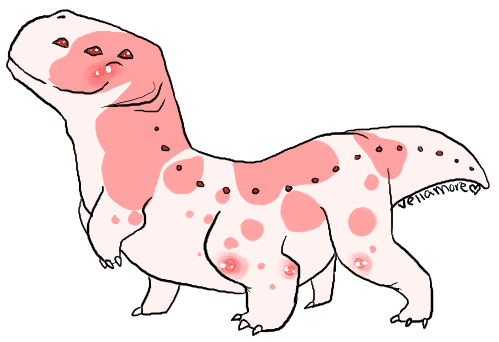
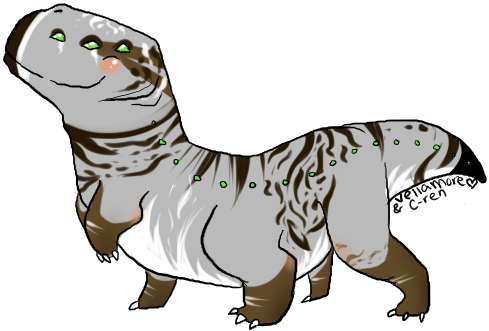
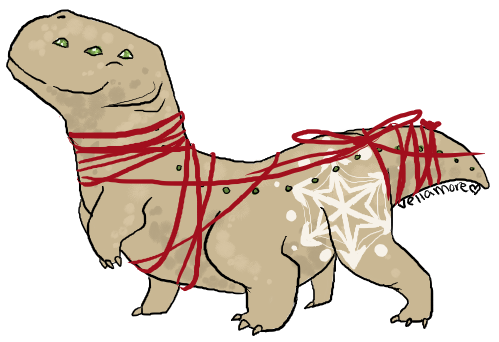
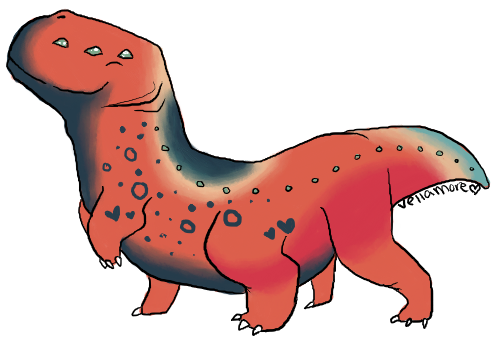
The hexapede caudata—better known as the Atlantean Six-Legged Salamander or the Atlantean Salamander—is one of the few known species to still be in existence which originated from Atlantis. They are hardy creatures of short stature and high intelligence. Scientists theorize that this prehistoric-looking creature may be a much smaller, more compact descendent of the Globidens, a mosasaur with rounded teeth. However, this creature is amphibious.
---
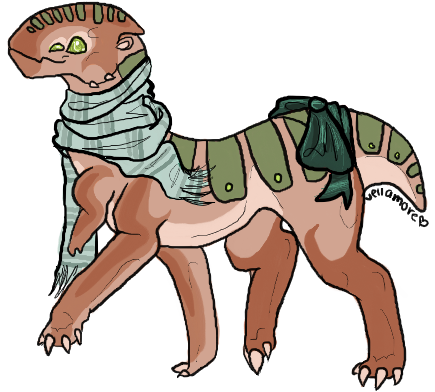
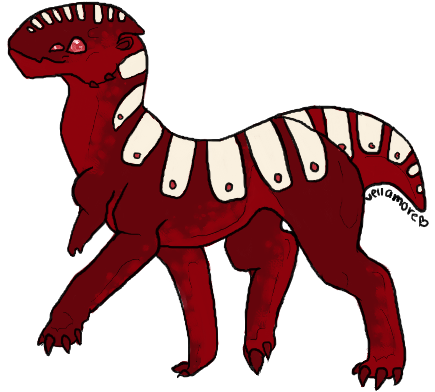
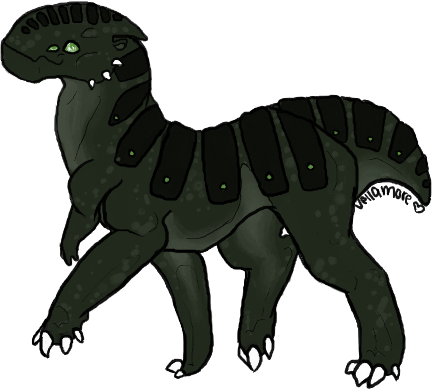
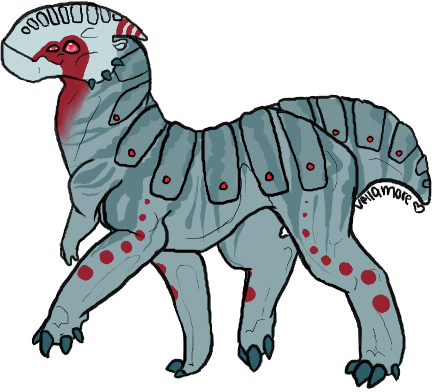
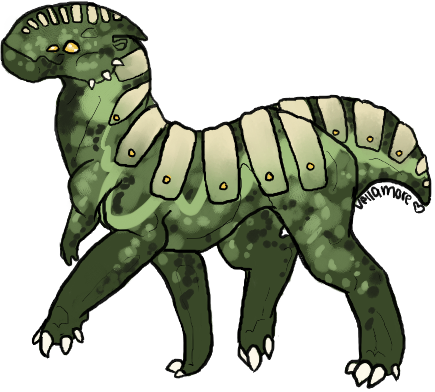
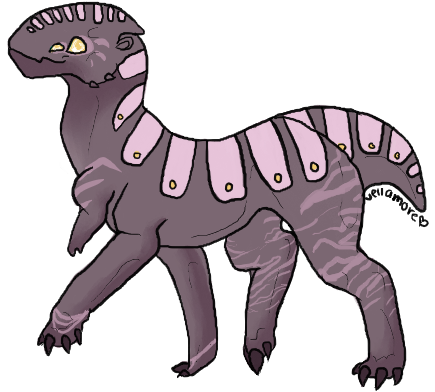
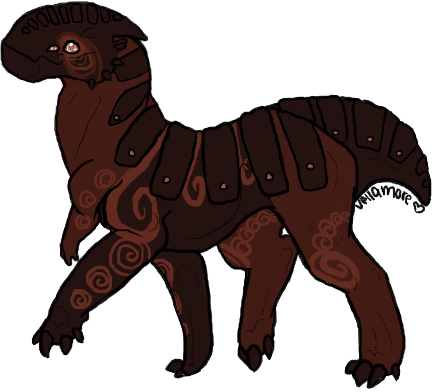
The hexapede cingulata-- better known as the Atlantean Six-Legged Armadillo, or the Atlantean Armadillo-- is a more recently discovered species from the era of Atlantis. They are taller and more developed than the Salamanders, and actually resemble dinosaurs more than they resemble armadillos. Their name, though, is derived from the tough plates along its back. Instead of fighting, they would rather curl up into a ball and display these plates to any enemies, hiding their head, extremities, and soft belly from harm. A bit rarer than their aquatic counterparts, these creatures are elusive and have proven to keep mostly to themselves. Not much is yet known about them.
Its pets, however, are doing quite well for themselves.
The hexapede caudata—better known as the Atlantean Six-Legged Salamander or the Atlantean Salamander—is one of the few known species to still be in existence which originated from Atlantis. They are hardy creatures of short stature and high intelligence. Scientists theorize that this prehistoric-looking creature may be a much smaller, more compact descendent of the Globidens, a mosasaur with rounded teeth. However, this creature is amphibious.
---
The hexapede cingulata-- better known as the Atlantean Six-Legged Armadillo, or the Atlantean Armadillo-- is a more recently discovered species from the era of Atlantis. They are taller and more developed than the Salamanders, and actually resemble dinosaurs more than they resemble armadillos. Their name, though, is derived from the tough plates along its back. Instead of fighting, they would rather curl up into a ball and display these plates to any enemies, hiding their head, extremities, and soft belly from harm. A bit rarer than their aquatic counterparts, these creatures are elusive and have proven to keep mostly to themselves. Not much is yet known about them.
A P P E A R A N C E + C H A R A C T E R I S T I C S ;
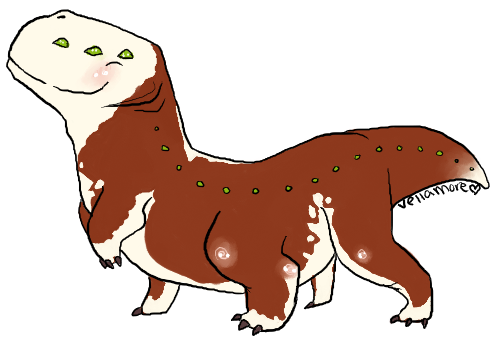
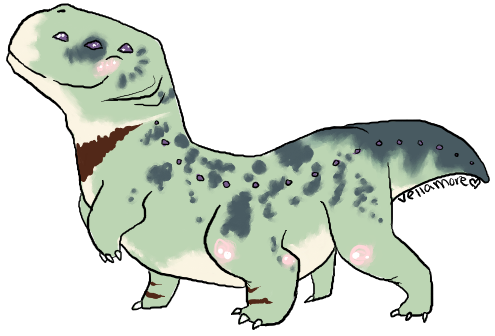
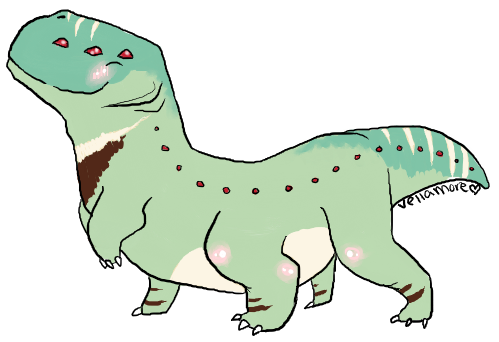
Atlantean Salamanders stand about two feet tall on all six legs, three feet when its forelimbs are held up. They are six feet long from nose to tail and can weigh an astonishing 150-200 pounds. Their body structure is dense and muscly, similar to a crocodile, as they are remarkable swimmers and also quick on land. They have rounded teeth like their supposed ancestors, and a long, sticky, froglike tongue.
The creature’s six eyes exist in sets of two and have separate functions—the first eye on either side of the head works like the human eye in terms of color, depth, and light. The second eye works as night vision, and can be used underwater to help the creature see in the black reaches of ponds and lakes. The third eye perceives temperature; red/white is hot, purple is cold. Each eye also has a second transparent eyelid which protects the eye in water and allows clearer vision, just like a pair of goggles.
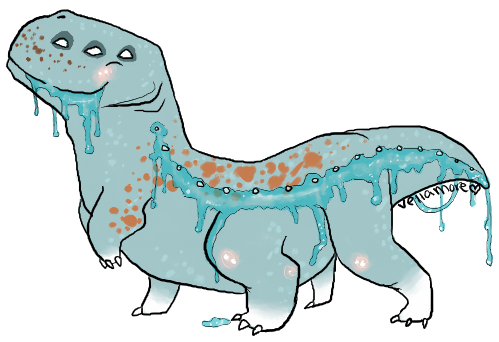
Along its side, the Atlantean Salamander has a series of small colored dots that work the way a fish’s lateral line works. These organs can sense the electrical currents given off by other living things in the water to alert the salamander to the location of potential predators or prey.
The final feature of this strange animal is its unique breathing system. Like most amphibians, the Atlantean Salamander has nostrils. They sit on the top of its head to allow it to take a breath when in the water without being seen. However, it also has gills. These creatures are able to switch between breathing through their nostrils or gills upon command, and some even go so far as to prefer one method over the other. Individuals have been noted to return to the water’s surface for air despite their gills.
---
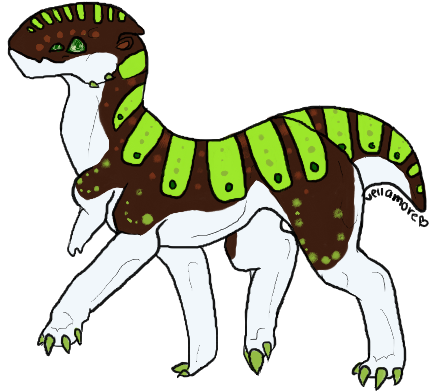
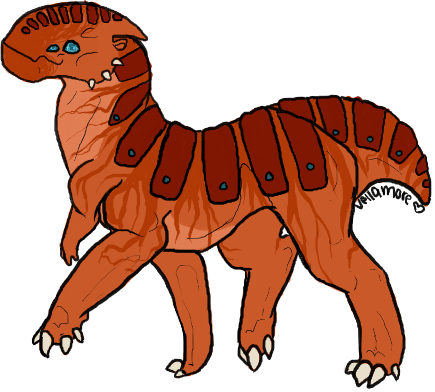
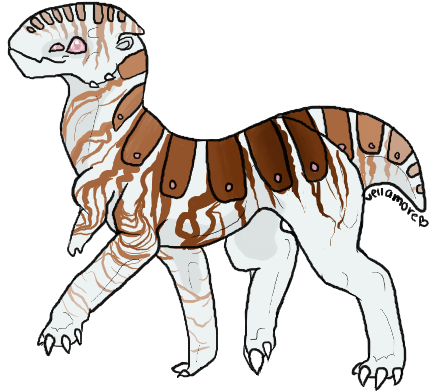
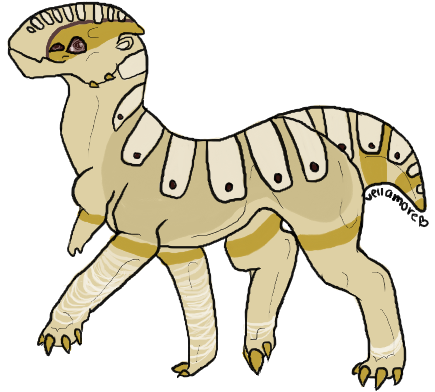
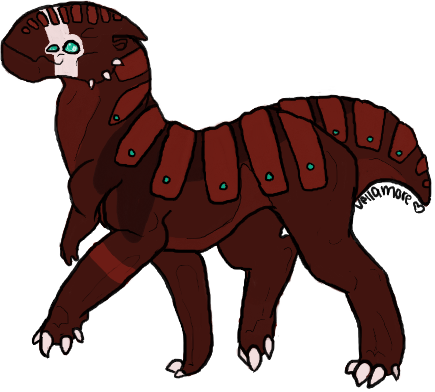
Atlantean Armadillos seem to range in size from four to five feet tall from the top of their head, and roughly the same length as they are tall. Their weight is unknown, but is estimated to be between 300 and 500 pounds. These creatures have extremely flexible spines and muscular, snake-like bodies. They have two sets of long legs with claws for walking, and a tiny set of arms with fleshy fingers at the base of their neck, probably used for more delicate tasks.
These creatures have four eyes-- two smaller ones with more human-like vision, and a second larger set with many different ranges of vision- ultraviolet, heat-sensitive, night vision, etc. They have two horns on the back of their skull that curve around their tiny outer ears, followed by a row of two or three spines on their jaw bone. It is assumed that they have excellent senses of sound and smell, but we don't yet know for sure. Their tongues are thick, reptilian, and prehensile.
Armadillos appear to have the same sort of lateral line that the Salamanders do, though it is not clear what it is used for since these creatures have not often been sighted in or around water. It has been noted, however, that there is a difference in appearance between genders in this species. Males are basically bigger and bulkier while females have smaller horns and skeletal structures, and are more slender. Females' claws also seem to be sharper, but the reasoning for this is not known.
The creature’s six eyes exist in sets of two and have separate functions—the first eye on either side of the head works like the human eye in terms of color, depth, and light. The second eye works as night vision, and can be used underwater to help the creature see in the black reaches of ponds and lakes. The third eye perceives temperature; red/white is hot, purple is cold. Each eye also has a second transparent eyelid which protects the eye in water and allows clearer vision, just like a pair of goggles.
Along its side, the Atlantean Salamander has a series of small colored dots that work the way a fish’s lateral line works. These organs can sense the electrical currents given off by other living things in the water to alert the salamander to the location of potential predators or prey.
The final feature of this strange animal is its unique breathing system. Like most amphibians, the Atlantean Salamander has nostrils. They sit on the top of its head to allow it to take a breath when in the water without being seen. However, it also has gills. These creatures are able to switch between breathing through their nostrils or gills upon command, and some even go so far as to prefer one method over the other. Individuals have been noted to return to the water’s surface for air despite their gills.
---
Atlantean Armadillos seem to range in size from four to five feet tall from the top of their head, and roughly the same length as they are tall. Their weight is unknown, but is estimated to be between 300 and 500 pounds. These creatures have extremely flexible spines and muscular, snake-like bodies. They have two sets of long legs with claws for walking, and a tiny set of arms with fleshy fingers at the base of their neck, probably used for more delicate tasks.
These creatures have four eyes-- two smaller ones with more human-like vision, and a second larger set with many different ranges of vision- ultraviolet, heat-sensitive, night vision, etc. They have two horns on the back of their skull that curve around their tiny outer ears, followed by a row of two or three spines on their jaw bone. It is assumed that they have excellent senses of sound and smell, but we don't yet know for sure. Their tongues are thick, reptilian, and prehensile.
Armadillos appear to have the same sort of lateral line that the Salamanders do, though it is not clear what it is used for since these creatures have not often been sighted in or around water. It has been noted, however, that there is a difference in appearance between genders in this species. Males are basically bigger and bulkier while females have smaller horns and skeletal structures, and are more slender. Females' claws also seem to be sharper, but the reasoning for this is not known.
D I E T + L I F E . C Y C L E ;
Atlantean Salamanders are omnivores. They eat a variety of plants as well as various insects and small aquatic animals. Small land animals usually do not suit their taste, but the preferred foods depend on the individual and the environment it lives in, as these creatures have become very adaptable in order to survive.
They are born from small, round, gooey eggs like all amphibians, and begin their life cycle as an ordinary tadpole. However, as they mature, their tail shortens, but they do not lose it, and they also grow three sets of legs. They do not lose their gills, and are able to choose life in the water, on land, or both. Adult Atlantean Salamanders do not always mate for life, but have been known to. Again, this depends on the individual, as not much is straightforward with this strange species. When the eggs are laid, the male and female take turns keeping watch over their precious cargo, and remain with the young until one month after they have hatched. After that point, they leave the tadpoles to fend for themselves.
These animals are generally very healthy and are not prone to any species-related health problems. They can live up to 50 years, and it is suspected they lived even longer in the time of Atlantis. They are social creatures and experts believe they were common household companions among Atlanteans, maybe even used as a working class.
---
It is believed that Armadillos are also omnivorous, though it seems that some individuals prefer a carnivorous diet, while others appear to be strictly vegetarian. They have never been seen eating fish or large prey, nothing bigger than a rabbit.
From what we have observed thus far, Atlantean Armadillos lay a single egg, with a hard shell and an oval shape. When they hatch, they have a small 'egg tooth' on the tip of their muzzle, resembling a small rhino horn. Their back plates are there, but are soft and vulnerable, not yet tough enough to protect them. They are also blind for the first week or so of their life. The mothers seem to take primary care of the young, though males do play a role as well. Once the offspring have matured, the parents have finished their job, and will leave. But in some cases, they appear to form herds with which they travel.
At this time we have not observed any health issues with the species, and since they are so newly discovered, we have no idea how long they live. Due to their size, we suspect they may have been used as pack animals for the Atlanteans, or maybe they were ridden like horses. However, their high intelligence suggests they may have had some more civilized purpose.
They are born from small, round, gooey eggs like all amphibians, and begin their life cycle as an ordinary tadpole. However, as they mature, their tail shortens, but they do not lose it, and they also grow three sets of legs. They do not lose their gills, and are able to choose life in the water, on land, or both. Adult Atlantean Salamanders do not always mate for life, but have been known to. Again, this depends on the individual, as not much is straightforward with this strange species. When the eggs are laid, the male and female take turns keeping watch over their precious cargo, and remain with the young until one month after they have hatched. After that point, they leave the tadpoles to fend for themselves.
These animals are generally very healthy and are not prone to any species-related health problems. They can live up to 50 years, and it is suspected they lived even longer in the time of Atlantis. They are social creatures and experts believe they were common household companions among Atlanteans, maybe even used as a working class.
---
It is believed that Armadillos are also omnivorous, though it seems that some individuals prefer a carnivorous diet, while others appear to be strictly vegetarian. They have never been seen eating fish or large prey, nothing bigger than a rabbit.
From what we have observed thus far, Atlantean Armadillos lay a single egg, with a hard shell and an oval shape. When they hatch, they have a small 'egg tooth' on the tip of their muzzle, resembling a small rhino horn. Their back plates are there, but are soft and vulnerable, not yet tough enough to protect them. They are also blind for the first week or so of their life. The mothers seem to take primary care of the young, though males do play a role as well. Once the offspring have matured, the parents have finished their job, and will leave. But in some cases, they appear to form herds with which they travel.
At this time we have not observed any health issues with the species, and since they are so newly discovered, we have no idea how long they live. Due to their size, we suspect they may have been used as pack animals for the Atlanteans, or maybe they were ridden like horses. However, their high intelligence suggests they may have had some more civilized purpose.
M U T A T I O N S + D I S E A S E S ;
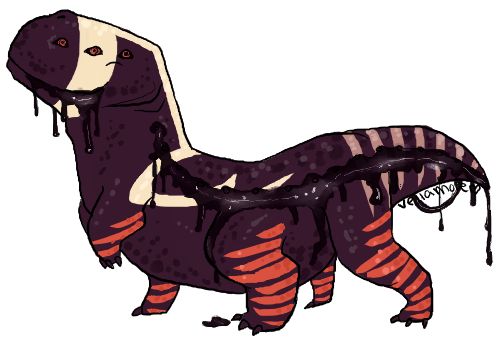
Every now and again, an Atlantean Salamander comes along with a unique feature or a type of illness. So far, none have been discovered that are fatal or life-threatening, but they do appear to be hereditary. The most common types can be seen here.
Fins
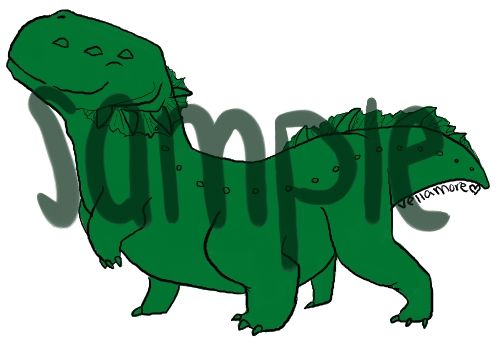
This is a physical mutation uncommon to these animals, and is simply a hereditary physical gene—like how some dogs have long fur, and some have short fur. The fins develop with the rest of the salamander’s physical characteristics as they mature, and grow along the chin behind the gills, as well as down the tail. The fin membrane is spread between a row of spiny barbs equipped with a mild poison that can be very dangerous in the right dosage.
Slime
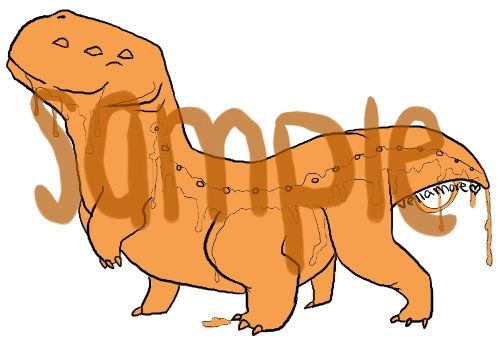
Some salamanders are born with a rather rare malfunction in their mucous glands that causes their lateral line to ooze a gooey substance known as slime for our purposes. This slime is also secreted from the salamander’s salivary glands in their mouth. It is harmless to the Atlantean Salamander and to humans, but if a predator ingests it, it can seal up their throat or block their digestion and prove to be fatal.
Fins
This is a physical mutation uncommon to these animals, and is simply a hereditary physical gene—like how some dogs have long fur, and some have short fur. The fins develop with the rest of the salamander’s physical characteristics as they mature, and grow along the chin behind the gills, as well as down the tail. The fin membrane is spread between a row of spiny barbs equipped with a mild poison that can be very dangerous in the right dosage.
Slime
Some salamanders are born with a rather rare malfunction in their mucous glands that causes their lateral line to ooze a gooey substance known as slime for our purposes. This slime is also secreted from the salamander’s salivary glands in their mouth. It is harmless to the Atlantean Salamander and to humans, but if a predator ingests it, it can seal up their throat or block their digestion and prove to be fatal.
Last edited by vee. on Sun Nov 25, 2012 3:48 pm, edited 5 times in total.
-
vee. - Posts: 3227
- Joined: Fri Aug 01, 2008 8:45 am
- My pets
- My items
- My wishlist
- My gallery
- My scenes
- My dressups
- Trade with me
{ A D O P T I O N }
by vee. » Sat Aug 11, 2012 6:36 am
A D O P T I O N S . A R E . . .
C L O S E D . Atlanteans are now closed to the general public and no new ones will be made for adoption. This species will only be available upon request from now on, or as gifts for friends of the staff members.
Last edited by vee. on Sat Mar 02, 2013 4:19 pm, edited 51 times in total.
-
vee. - Posts: 3227
- Joined: Fri Aug 01, 2008 8:45 am
- My pets
- My items
- My wishlist
- My gallery
- My scenes
- My dressups
- Trade with me
{ E V E N T S / C O N T E S T S }
by vee. » Sat Aug 11, 2012 6:37 am
E V E N T S ;
Nothing is happening! :D Yay exciting!
Last edited by vee. on Fri Jan 18, 2013 4:50 am, edited 32 times in total.
-
vee. - Posts: 3227
- Joined: Fri Aug 01, 2008 8:45 am
- My pets
- My items
- My wishlist
- My gallery
- My scenes
- My dressups
- Trade with me
{ C U S T O M S }
by vee. » Sat Aug 11, 2012 6:37 am
C U S T O M . I N F O ;
Here, you will be able to order your own custom-colored Salamander or Armadillo. Currently, customs are CLOSED.
While this shop is usually free, customs will not be. You will have to pay with CS pets. The cost is steep because we want the main focus of this shop to be free adoptables, not custom lineart. Customs will also be open very rarely.
While this shop is usually free, customs will not be. You will have to pay with CS pets. The cost is steep because we want the main focus of this shop to be free adoptables, not custom lineart. Customs will also be open very rarely.
C U S T O M . P A Y M E N T ;
Each artist will have their own payment method, listed here. You will have to check to make sure you are paying with pets on your artist's wishlist, unless otherwise specified!
• Vellamore; closed.
• Backseatpanda; closed.
• Tennisbutt; one rare WL pet.
• Vellamore; closed.
• Backseatpanda; closed.
• Tennisbutt; one rare WL pet.
C U S T O M . R U L E S ;
1. Customs CAN be colored based on your fursona or character. However, accessories and lineart edits will not be added.
2. Mutations CAN be added to your custom, currently for no extra charge. This may change.
3. You CAN'T ask the artist to just "design anything!" for you. If you are ordering a custom, you must have some idea of what you want-- a color pallete and preferred markings, or a reference image/description.
4. Your custom CAN'T be a "mix between Salamander 1 and Salamander 2." That is a breeding.
5. You CAN'T grab a custom slot for a friend. It must be for you!
6. Your custom CAN'T be a Sparkle-Salamander.
7. Your custom CAN'T be colored like any existing CS pets. We have a freebies section for that.
2. Mutations CAN be added to your custom, currently for no extra charge. This may change.
3. You CAN'T ask the artist to just "design anything!" for you. If you are ordering a custom, you must have some idea of what you want-- a color pallete and preferred markings, or a reference image/description.
4. Your custom CAN'T be a "mix between Salamander 1 and Salamander 2." That is a breeding.
5. You CAN'T grab a custom slot for a friend. It must be for you!
6. Your custom CAN'T be a Sparkle-Salamander.
7. Your custom CAN'T be colored like any existing CS pets. We have a freebies section for that.
C U S T O M . F O R M S ;
Please fill out this form and post it on the thread; the artist open for customs will go through and choose a certain number of correct forms-- so just because you post first doesn't mean you're guaranteed a spot.
Remove any parentheses from the forms while you fill it out! Those are just there to help you understand (:
For a custom by Vellamore;
-closed-
For a custom by Backseatpanda;
-closed-
For a custom by Tennisbutt;
-closed-
Remove any parentheses from the forms while you fill it out! Those are just there to help you understand (:
For a custom by Vellamore;
-closed-
For a custom by Backseatpanda;
-closed-
For a custom by Tennisbutt;
-closed-
Last edited by vee. on Wed Oct 31, 2012 3:14 am, edited 8 times in total.
-
vee. - Posts: 3227
- Joined: Fri Aug 01, 2008 8:45 am
- My pets
- My items
- My wishlist
- My gallery
- My scenes
- My dressups
- Trade with me
{ A T L A N T E A N . P O U N D }
by vee. » Sat Aug 11, 2012 6:38 am
P O U N D ;
Any unwanted Salamanders and Armadillos will have their image placed here. A form will be custom made for each creature.
Kennel #1 wrote:
Adopted
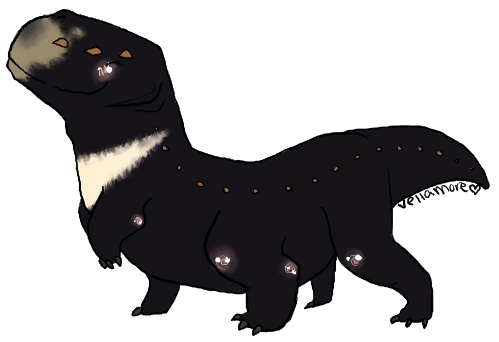
This is Luna, a female Salamander whose design is based on the Asian Black Bear, also known as the Moon Bear. Things didn't work out at her last home, so now she's back with us at the shelter looking for her forever home.
To win her, you're required to describe her appearance OR her personality in three words, as well as show us a picture of the prettiest moon you can find!
- Code: Select all
[b]Application for Luna![/b]
[b]Username:[/b]
[b]Describe her in three words:[/b]
[b]Moon photo:[/b]
Kennel #2 wrote:
This female Armadillo was designed based on a holiday cookie, but didn't get a home during our winter event. But hey, cookies aren't just for the holidays! Treat yourself if you wish, this girl is a sweetie!
- Code: Select all
[b]Frosting and Sprinkles![/b]
[b]Username:[/b]
[b]Name:[/b]
[b]Gender:[/b] Female
[b]Your favorite dessert:[/b]

x
x
Last edited by vee. on Fri Jan 18, 2013 4:49 am, edited 9 times in total.
-
vee. - Posts: 3227
- Joined: Fri Aug 01, 2008 8:45 am
- My pets
- My items
- My wishlist
- My gallery
- My scenes
- My dressups
- Trade with me
{ A R C H I V E }
by vee. » Sat Aug 11, 2012 6:38 am
A R C H I V E ;
Here is a list of all the current Salamanders and Armadillos, listed alphabetically by owner. In the event that this post gets too long in the future, a new thread will be created to serve as the archive.
A - E
Millan, male - owned by amour.
Kenopsia, male - owned by azalea
Strawberry-Mint, female - owned by Backseatpanda
Folium-Ranae, male - owned by BlackPersianSheep
Tigris, female - owned by BlackPersianSheep
unnamed, male - owned by BlackPersianSheep
Farewell, female - owned by camelopardalis.
Genevieve, female - owned by camelopardalis.
Lantern, male - owned by camelopardalis.
Nyla, female - owned by camelopardalis.
Poppy Rose, female - owned by camelopardalis.
Ubu, female - owned by camelopardalis.
Giraffe, female - owned by Coy
Gisk, male - owned by Coy
Jey, male - owned by Coy
Glucose, male - owned by C-ren
Rosa Chinensis, female - owned by C-ren
Pinebol, male - owned by C-ren
Souer Pumokin, male - owned by C-ren
Peach, female - owned by C r i c k e t★
Zaphirisk, female - owned by C r i c k e t★
Milkshake, male - owned by Cronus
Queen, female - owned by Cronus
Rahim, male - owned by Cronus
Solitaire, male - owned by Cronus
Sunburst, female - owned by -Dark-Fire-Wolf-
Kenopsia, male - owned by azalea
Strawberry-Mint, female - owned by Backseatpanda
Folium-Ranae, male - owned by BlackPersianSheep
Tigris, female - owned by BlackPersianSheep
unnamed, male - owned by BlackPersianSheep
Farewell, female - owned by camelopardalis.
Genevieve, female - owned by camelopardalis.
Lantern, male - owned by camelopardalis.
Nyla, female - owned by camelopardalis.
Poppy Rose, female - owned by camelopardalis.
Ubu, female - owned by camelopardalis.
Giraffe, female - owned by Coy
Gisk, male - owned by Coy
Jey, male - owned by Coy
Glucose, male - owned by C-ren
Rosa Chinensis, female - owned by C-ren
Pinebol, male - owned by C-ren
Souer Pumokin, male - owned by C-ren
Peach, female - owned by C r i c k e t★
Zaphirisk, female - owned by C r i c k e t★
Milkshake, male - owned by Cronus
Queen, female - owned by Cronus
Rahim, male - owned by Cronus
Solitaire, male - owned by Cronus
Sunburst, female - owned by -Dark-Fire-Wolf-
F - J
K - O
Butter, female - owned by Kestral&Leo
Fleur, female (Blue x Xerxes) - owned by Kestral&Leo
Spore, male - owned by Kestral&Leo
Xerxes, female - owned by Kestral&Leo
Skript, female - owned by .King.Boo..
Rahl, male - owned by .King.Boo..
Venice, female - owned by .King.Boo..
Alaska, female - owned by Liru Kaulitz
Kaiya, female - owned by Liru Kaulitz
Mocha, female - owned by Liru Kaulitz
Munsell, male - owned by little fox
Fleur, female (Blue x Xerxes) - owned by Kestral&Leo
Spore, male - owned by Kestral&Leo
Xerxes, female - owned by Kestral&Leo
Skript, female - owned by .King.Boo..
Rahl, male - owned by .King.Boo..
Venice, female - owned by .King.Boo..
Alaska, female - owned by Liru Kaulitz
Kaiya, female - owned by Liru Kaulitz
Mocha, female - owned by Liru Kaulitz
Munsell, male - owned by little fox
P - T
Mocha, female - owned by Rosalind
Ink, male - owned by Rose Kaulitz
unnamed, - owned by Soteria
Wäffer, male - owned by Soteria
Geotto, male - owned by She-Hound
Couverture, male - owned by Sheer
Letter, male - owned by Tacita
Lettuce, male - owned by tennisbutt
Aphrodite, female - owned by TheNightsIllusion
Balto, male - owned by TheNightsIllusion
Demeter, female - owned by TheNightsIllusion
Dragonfly, female - owned by TheNightsIllusion
Eris, female - owned by TheNightsIllusion
Eros, male - owned by TheNightsIllusion
Ink, male - owned by Rose Kaulitz
unnamed, - owned by Soteria
Wäffer, male - owned by Soteria
Geotto, male - owned by She-Hound
Couverture, male - owned by Sheer
Letter, male - owned by Tacita
Lettuce, male - owned by tennisbutt
Aphrodite, female - owned by TheNightsIllusion
Balto, male - owned by TheNightsIllusion
Demeter, female - owned by TheNightsIllusion
Dragonfly, female - owned by TheNightsIllusion
Eris, female - owned by TheNightsIllusion
Eros, male - owned by TheNightsIllusion
U - Z
Cia, female - owned by Veggievampire
Manny, male - owned by Veggievampire
Mo, male - owned by Vellamore
Red, male - owned by Vellamore
Tara-Cotta, female - owned by Vellamore
Manny, male - owned by Veggievampire
Mo, male - owned by Vellamore
Red, male - owned by Vellamore
Tara-Cotta, female - owned by Vellamore
Last edited by vee. on Fri Jan 18, 2013 4:42 am, edited 47 times in total.
-
vee. - Posts: 3227
- Joined: Fri Aug 01, 2008 8:45 am
- My pets
- My items
- My wishlist
- My gallery
- My scenes
- My dressups
- Trade with me
{ A F F I L I A T E S + A D V E R T I S I N G }
by vee. » Sat Aug 11, 2012 8:05 am
A F F I L I A T E S ;
PM me to become an affiliate.

A D V E R T I S E M E N T ;
We currently have two stamps; the first was done by Soteria (: Here is the code!

Our second stamp is made by scmarshtacky; here is the code!

We also have a new banner! The pixel art of Tara-Cotta was made by Sharkknight, and the text was added by me; here is the code if you would like to use it in your own signature!

- Code: Select all
[url=http://www.chickensmoothie.com/Forum/viewtopic.php?f=58&t=1340612][img]http://i1282.photobucket.com/albums/a533/sotesote/Hymns/Customs/atlanteanadopts.png[/img][/url]
Our second stamp is made by scmarshtacky; here is the code!
- Code: Select all
[url=http://www.chickensmoothie.com/Forum/viewtopic.php?f=58&t=1340612][img]http://i1080.photobucket.com/albums/j332/tessmarieee/asls/atlantean-salamander-stamp.jpg[/img][/url]
We also have a new banner! The pixel art of Tara-Cotta was made by Sharkknight, and the text was added by me; here is the code if you would like to use it in your own signature!
- Code: Select all
[url=http://www.chickensmoothie.com/Forum/viewtopic.php?f=58&t=1340612][img]http://25.media.tumblr.com/tumblr_m9g9alGvVu1r32087o1_100.gif[/img][img]http://i1080.photobucket.com/albums/j332/tessmarieee/asls/asls-adopts.png[/img][/url]
Last edited by vee. on Mon Dec 10, 2012 3:46 am, edited 5 times in total.
-
vee. - Posts: 3227
- Joined: Fri Aug 01, 2008 8:45 am
- My pets
- My items
- My wishlist
- My gallery
- My scenes
- My dressups
- Trade with me
{ B L A C K L I S T / W A R N I N G S }
by vee. » Sat Aug 11, 2012 11:57 am
B L A C K L I S T ;
None! Let's keep it that way (:
Users listed here are unable to post here in the thread. Temporary blackisted members may not adopt any Salamanders during the time, but are permitted to own them if they have them already. Permanently blacklisted members may not adopt OR own any Salamanders, and if they have any, they will be confiscated.
Users listed here are unable to post here in the thread. Temporary blackisted members may not adopt any Salamanders during the time, but are permitted to own them if they have them already. Permanently blacklisted members may not adopt OR own any Salamanders, and if they have any, they will be confiscated.
W A R N I N G S ;
None! Let's keep it that way (:
Users listed here will have one, two, or three x's listed next to their name. If a user has three strikes, and they break a rule, they will be placed on the blacklist.
Users listed here will have one, two, or three x's listed next to their name. If a user has three strikes, and they break a rule, they will be placed on the blacklist.
Last edited by vee. on Mon Sep 17, 2012 4:23 am, edited 7 times in total.
-
vee. - Posts: 3227
- Joined: Fri Aug 01, 2008 8:45 am
- My pets
- My items
- My wishlist
- My gallery
- My scenes
- My dressups
- Trade with me
{ F R E E B I E S }
by vee. » Sun Aug 12, 2012 1:05 am
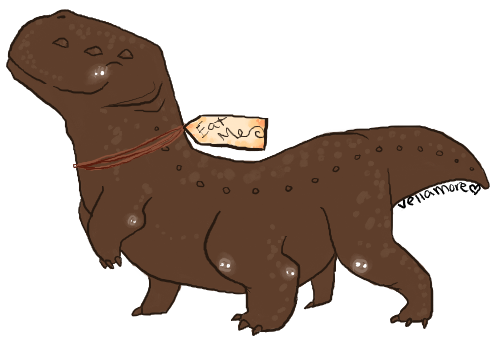
F R E E . U S E . S A L A M A N D E R S ;
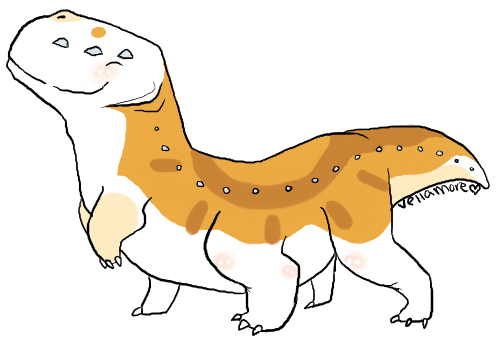
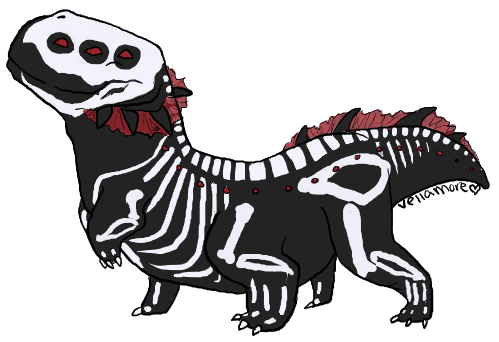
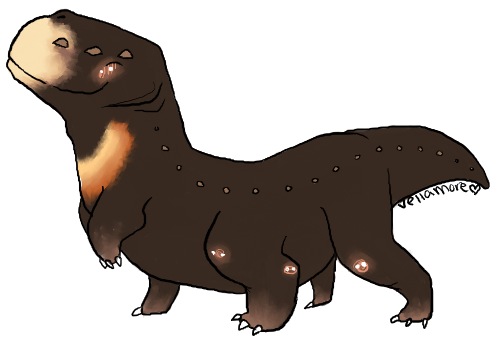
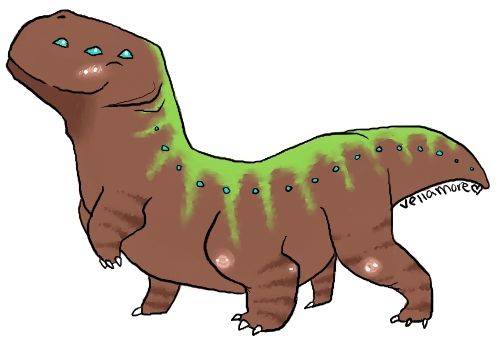
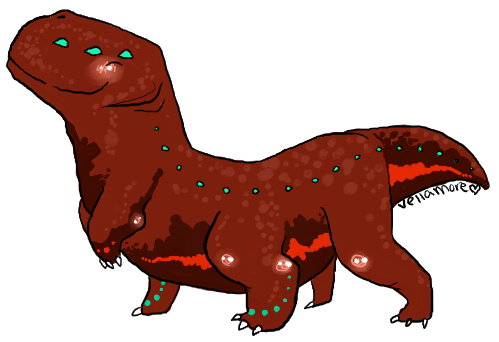
These Salamanders are modeled after popular CS pets, and are free for anyone to use in their signature or wherever they want! Do not alter the links though, please!
Sunback;
- Code: Select all
[url=http://www.chickensmoothie.com/Forum/viewtopic.php?f=58&t=1340612][img]http://i1080.photobucket.com/albums/j332/tessmarieee/asls/z-sunback.png[/img][/url]
Eat Me Dog;
- Code: Select all
[url=http://www.chickensmoothie.com/Forum/viewtopic.php?f=58&t=1340612][img]http://i1080.photobucket.com/albums/j332/tessmarieee/asls/z-eatmedog.png[/img][/url]
Last edited by vee. on Sat Sep 15, 2012 1:21 am, edited 1 time in total.



























-
vee. - Posts: 3227
- Joined: Fri Aug 01, 2008 8:45 am
- My pets
- My items
- My wishlist
- My gallery
- My scenes
- My dressups
- Trade with me
Who is online
Users browsing this forum: No registered users and 1 guest