
Forum rules
Oekaki posts must follow our Rules for the Site and Forum,
including the Oekaki Rules and Art Rules.
Having trouble using oekaki? Check out the Oekaki Guide or send in a help ticket.
Oekaki posts must follow our Rules for the Site and Forum,
including the Oekaki Rules and Art Rules.
Having trouble using oekaki? Check out the Oekaki Guide or send in a help ticket.
draquin drafts : grand opening event! by azemyc

| Artist | azemyc [gallery] |
| Time spent | 14 hours, 33 minutes |
| Drawing sessions | 16 |
| 39 people like this | Log in to vote for this drawing |
Versions of this drawing that people have created recently

by FireIceHeart

by FireIceHeart

by FireIceHeart

by FireIceHeart

by FireIceHeart

by FireIceHeart

by azemyc

by azemyc
33 posts
• Page 1 of 4 • 1, 2, 3, 4
draquin drafts : grand opening event!
 by azemyc » Sat May 02, 2026 6:58 pm
home | fanclub | events hub | activities | transfers + updates | shop
-------
about draquins:
Draquins are large horse-like creatures that have been domesticated from wild aeries over the ages. They received the 'Draft' title due to their formidable size and strength, both of which lent themselves well to Draquins being domesticated as a working breed. Despite these origins, a substantial competitive showing scene has grown for them in recent years. The breed does lend itself well to showing and competitions, as they tend to have varied coats, traits, and usually have a temperment that works well for it. Many aeries have been created to support the breed and these aeries work towards maintaining and perfecting their bloodlines generation to generation. Wild Draquins still roam in large groups across their native range, however, and still follow the same routes that former generations did years ago.
-------
general biology:
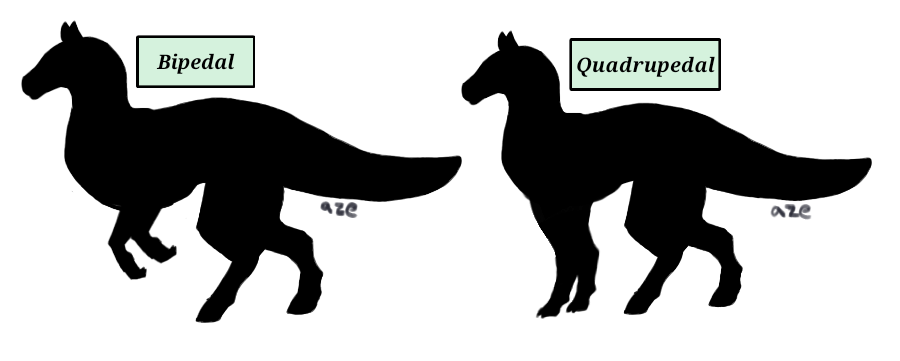
Draquins are facultative bipeds who evolved to endure a wide range of habitat. They can be found everywhere from marshy lowlands, to shrubby uplands, tundra, and even steep mountain ranges. Due to this large range of habitat types, Draquins express a wide variety of external traits. There are lineages of Draquin known for their feathers, horns, others for their long manes and feathered legs, and a rare few for their armor-like scales. A Draquin's diet is similiar to a bear's in that while a main part of their diet is made up of meat, they do also enjoy foraging for berries, mushrooms, insects, roots, and may occasionally nibble on certain plants. This varied diet supports their massive frames. Draquin Drafts are typically between 16 and 24hh.
They are social animals and naturally form groups called 'aeries'. These aeries can vary in size from one breeding pair to an established aerie made up of a breeding pair, their offspring, and any non-related members who were absorbed into the aerie. It is not uncommon for breeding pairs to break apart, for one of a pair to be removed by competitors, or for offspring to overtake/inherit an aerie with an unrelated partner if they do not disperse. Competition for aerie control rises steeply in the fall during the breeding season, as Draquins pair off. Domesticated Draquins are typically within managed aeries where these complex social behaviors are moderated to prevent injury and infighting.
Draquin typically have one foal at a time, though rare instances of twins have been documented. Foals take 5-6 years to reach adulthood, and typically stay close with their birth aerie until fully grown.
Last edited by azemyc on Tue May 19, 2026 3:59 am, edited 18 times in total.
-

azemyc - Posts: 15579
- Joined: Sun Jun 12, 2011 9:08 am
- My pets
- My items
- My wishlist
- My gallery
- My scenes
- My dressups
- Trade with me
draquin staff and rules
by azemyc » Sat May 02, 2026 6:58 pm
-----------
General Rules:
1: follow all cs rules (no harassment, no bigotry, family friendly/pg-13, etc.)
2: do not claim ownership of draquins you do not own, and please credit back to me (azemyc) on CS and th if used off site
3: rules will be added to/changed as needed
4: AI usage from anyone involved with or participating in the species at any point is strictly prohibited.
5: Users banned or prohibited from participating in the species will be permitted to keep their Draquin, however, they will not be allowed to use them in any Draquin events or species functions.
Adopts Rules:
1: you must have some sort of tracker or central hub to keep slot and adopt information.
2: no changing your draquin's design without proper items
3: you may add accessories without approval/items so long as they don't mimic traits
4: you may trade/sell/transfer into other species after a two week cooldown that starts once you own the draquin.
5: with the artist's approval, and if permitted by the other species, you may 'duplicate' / transfer a design into other species and still use the original draquin in the ARPG and Draquin Drafts species, and vice versa. Credit must be given for the original design to the artist.
6: Transfers in must follow Draquin Draft rules and species traits.
7: Draquin Drafts follow horse genetics with a few additional color genes. Genetic strings are provided and may not be edited unless approved or for an update
Species Rules:
1: draquin drafts may be any gender and may breed with any unrelated draquin
2: draquin get 10 breeding slots. These slots may be traded, sold, etc.
3: draquin may be protrayed as wild or domesticated in art, writing, etc. for the species run events
4: you do not need to follow species 'lore' with your adopted draquin outside of species run arpg stuff
5:
-------
FAQs:
Q: Is there an archive?
A: There is an archive planned, but for now personal trackers are sufficient enough.
Q: Will there be ARPG functions?
A: Eventually there might be! For now, though, I'm focusing on just building the species up.
Q: How much freedom is there with genetics?
A: It's kinda loosey-goosey! The genetics are more or less there for breeding purposes and for rarity and variety, but artists and those making customs + MYOs have the ability to interpret as needed and the flexibility to just have fun with things. The genes are more or less loose guidelines instead of law.
Q: Do I have to use the premade trait lines?
A: Nope! You're allowed to make your own lines as long as they do not mimic another trait or add something the species does not have.
Q: Do I have to participate in any future ARPG events or functions for anything?
A: No, you do not. ARPG stuff will be completely voluntary. You will have access to the store, items, breeding, etc., without participating in the ARPG.
Q: ---
Last edited by azemyc on Fri May 22, 2026 1:48 am, edited 15 times in total.
-
azemyc - Posts: 15579
- Joined: Sun Jun 12, 2011 9:08 am
- My pets
- My items
- My wishlist
- My gallery
- My scenes
- My dressups
- Trade with me
draquin genetics and traits
by azemyc » Sat May 02, 2026 6:58 pm
genetics and traits:
While Draquins utilize genetics, they are not the end-all, be-all for a design. I encourage artists and those making customs or MYOs to have fun and use their artistic abilities to create designs, instead of worrying over how accurate a genetic string may be.
this guide aims to help with understanding the genetic string that is provided for your Draquin Draft and helps with seeing how the genetics influence the designs. Draquins primarily follow horse genetics, however, they have additional genes specific to the species to allow for more variation and color range. Unnatural colors are possible through the interaction of the CYMK genes and the traditional base genes. Different genes also have different rarities, which are indicated in the information below.
Genetics are determined by a string of genes and pass based on traditional models of inheritance (recessive, dominant, incomplete dominance, co-dominant, etc.). Traits, however, are not tied to genetics and include physical add-ons like horns, mane styles, scales, and feathers. These pass based on % chance based on rarity.
C - Common [ Standard ]
UC - Uncommon [ Not usually seen, maybe 20-40% of the population ]
R - Rare [ Difficult to find, under 20% ]
E - Exotic [ Extremely rare, limited, under 5% ]
Rarity does not influence breed pass chances at this time. Breed chances of any gene follow the punnet square.
- base color modifiers
Agouti Locus
controls the distribution of black pigment and can restrict it to points on the Draquin. a/a will produce a fully black Draquin and is recessive. does not influence chestnut bases. Any 'A' genes will produce a bay base Draquin.
A - C - Bay
A+ - C - Wild Bay
At - UC - Seal Brown
a - UC - Black
Extension Locus
controls production of red and black pigments, E/e or E/E will produce a black base Draquin. e/e will produce a chestnut base Draquin.
E - UC - Black base
e/e - C - Chestnut
Dilution Genes
Dilution genes lighten the pigment in a Draquin's coat.
Base modifiers
Change the base coloration in some way.
Gray - R - G/g
Pangare - R - n/Png
Sooty - UC - n/Sty
Flaxen - R - n/Fl (chesnuts only)
Silver - R - n/Slv (black bases only)
hue modifiers
add unnatural pigmentation to a Draquin's coat or markings. Single gene expression changes the markings, double gene changes the base.
Cyan - R - n/Cy
Yellow - R - n/Yw
Magenta - R - n/Mg
white markings
produce white patches or spots of varying shape and intensity on a Draquin
Appaloosa - UC - n/LP
PATN-1 - UC - n/patn1
PATN-2 - R - n/patn2
Dominant White - C - n/W
Sabino - UC - n/Sb
Rabinco - UC - n/Rb
Splash White - C - n/Spl
Tobiano - UC - n/To
Overo - UC - n/O
Lace - R
other markings:
various other markings not tied to a specific locus or that are unique genes introduced for the species
Chimera - E - separate distinct coats. Draquin with this mutation will have multiple genetic strings for each coat. Rolls in breedings at a 10% chance.
Brindle - UC - n/Br - fine striping, typically darker than the base.
Somatic - R - n/Sm - 'interrupted' patches of color on a Draquin where the modifiers don't apply.
Harlequin - E - n/Hq - Merle like splotches covering the entire Draquin, darker than the base.
Striped - UC - n/Str - striped markings darker than the base. May be any style of natural striping.
Mottled - UC - n/Mt - spots of any kind darker than the base. May be any style of natural spotting.
Syrup - R - n/Sy drippy markings down the back and neck of a Draquin. Usually has a gradient, darker than the base.
Inverse - E - n/Iv - Inverts the effect of any applied marking. For example, if a marking typically is darker than the base color, the marking will now be lighter than the base.
Non genetic markings
Random little spots or markings that do not rely on gene expression and may pass at an artist's discretion.
Birdcatcher Spots - UC
Grease Spots - UC
Last edited by azemyc on Fri May 22, 2026 1:50 am, edited 30 times in total.
-
azemyc - Posts: 15579
- Joined: Sun Jun 12, 2011 9:08 am
- My pets
- My items
- My wishlist
- My gallery
- My scenes
- My dressups
- Trade with me
affliates and misc.
by azemyc » Sat May 02, 2026 6:59 pm
stamp:
affliates:
- Code: Select all
[url=https://www.chickensmoothie.com/Forum/viewtopic.php?f=123&t=5125585][img]https://i.ibb.co/KzqHfnnK/stamp-copy-a7c4.png[/img][/url]
affliates:
Last edited by azemyc on Sat May 16, 2026 4:18 am, edited 2 times in total.
-
azemyc - Posts: 15579
- Joined: Sun Jun 12, 2011 9:08 am
- My pets
- My items
- My wishlist
- My gallery
- My scenes
- My dressups
- Trade with me
Re: draquin drafts : wip
by CrossbredManiac » Sat May 02, 2026 9:45 pm
This is so baller consider me ur first draquin enjoyer
Peri | He/They || Artist/Designer |l CrossbredManiac Everywhere |_ [ADULT]
(TF:P, Moomin, Homestuck, Osu!, Madcom, TADC)


 Certified Starscream Yume
Icons by nullcodes on Toyhou.se and myself. Divider by Knockoutfangirl.


(TF:P, Moomin, Homestuck, Osu!, Madcom, TADC)
Art mostly every other day. Mostly.
Certified Starscream Yume Icons by nullcodes on Toyhou.se and myself. Divider by Knockoutfangirl.
-
CrossbredManiac - Posts: 547
- Joined: Sun Aug 10, 2014 5:55 pm
- My pets
- My items
- My wishlist
- My gallery
- My scenes
- My dressups
- Trade with me
Re: draquin drafts : wip
by Nanorat » Sat May 02, 2026 10:03 pm
So cool, mark! 
#41722
♥ hopelessly addicted to adoptables ♥
♥ My Adopted Babies (General Topic, image heavy) ♥
♥ Stars Storage ♥ | ♥ Skojare Storage ♥ | ♥ Fable Storage ♥ | ♥ Zaherix Storage ♥
♥ WME Storage ♥ | ♥ RCW Storage ♥ | ♥ GS Storage ♥ | ♥ WotW Storage ♥
♥ Equuiossa Storage ♥ | ♥ Buttermilk Storage ♥ | ♥ Kalon Storage ♥
♥ Gleep Storage ♥
♥ hopelessly addicted to adoptables ♥
♥ My Adopted Babies (General Topic, image heavy) ♥
♥ Stars Storage ♥ | ♥ Skojare Storage ♥ | ♥ Fable Storage ♥ | ♥ Zaherix Storage ♥
♥ WME Storage ♥ | ♥ RCW Storage ♥ | ♥ GS Storage ♥ | ♥ WotW Storage ♥
♥ Equuiossa Storage ♥ | ♥ Buttermilk Storage ♥ | ♥ Kalon Storage ♥
♥ Gleep Storage ♥
-
Nanorat - Posts: 13053
- Joined: Sat Aug 08, 2009 11:30 pm
- My pets
- My items
- My wishlist
- My gallery
- My scenes
- My dressups
- Trade with me
Re: draquin drafts : wip
by cinerious » Sun May 03, 2026 12:52 am
YOOO I LOVE the shape of these!!!
★ ☆ ★ cin/daphne | they/them ★ ☆ ★


-

cinerious - Posts: 8263
- Joined: Mon Aug 22, 2011 7:27 am
- My pets
- My items
- My wishlist
- My gallery
- My scenes
- My dressups
- Trade with me


-
Loonamoth21 - Posts: 1721
- Joined: Tue Jun 03, 2025 3:25 pm
- My pets
- My items
- My wishlist
- My gallery
- My scenes
- My dressups
- Trade with me
Re: draquin drafts : wip
by molotov » Sun May 03, 2026 1:43 am
- marking, these look marvelous, I love their shape.

-

molotov - Posts: 18191
- Joined: Sun Feb 23, 2014 7:59 am
- My pets
- My items
- My wishlist
- My gallery
- My scenes
- My dressups
- Trade with me
Re: draquin drafts : wip
by rem sleep » Sun May 03, 2026 2:53 am
Mark! These are so cool!!!
fish time wrote:

♥ ♥ ♥
rem sleep - they / them
nocturnal artist, socially awkward
♥ ♥ ♥
♥ umas ♥ storkies ♥
♥ closed species bank ♥
♥ ♥ ♥
-

rem sleep - Posts: 23448
- Joined: Mon Jul 11, 2011 9:42 pm
- My pets
- My items
- My wishlist
- My gallery
- My scenes
- My dressups
- Trade with me
33 posts
• Page 1 of 4 • 1, 2, 3, 4
Who is online
Users browsing this forum: No registered users and 0 guests