Entries

Entries for the competitions

Forum rules
Oekaki posts must follow our Rules for the Site and Forum,
including the Oekaki Rules and Art Rules.


Having trouble using oekaki? Check out the Oekaki Guide or send in a help ticket.
  • Gallery display:

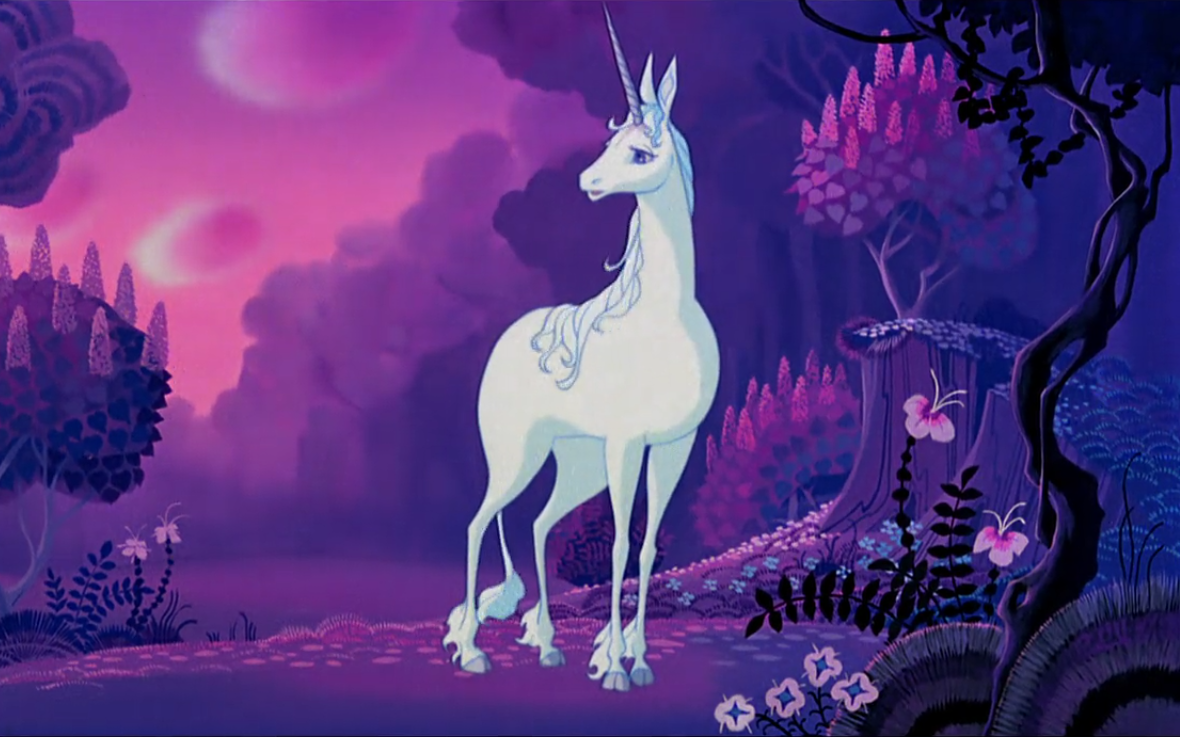
Design a equine based on this drawing by silver ~
by IceFire @ Sun Sep 21, 2025 2:33 pm [Reply]

-Entering with six designs.

1.- Buckskin Roan Pintaloosa with Gulastra plume and Corn spots
2.- Chestnut Fleabitten with Gulastra plume and Bloody shoulder
3.- Sooty Silver Mouse Dun Splash Overo
4.- Wild Bay Pangare Sabino with Gulastra plume
5.- Sooty Silver Bright Bay with Bird catcher spots and Badger face
6.- Silver Black Roan Grey Splash Chimera Smokey Cream Roan Sabino

designs based on this drawing by silver ~
by rebelappy @ Sat Sep 20, 2025 8:48 pm [Reply]

might do more, some reds! didn’t mean to do all black based ugh just kinda happened. had these in drafts decided to finish up!

blue roan blanket appt
grullo sabino glustra plume

ChristainAnimalLover @ Sun Sep 21, 2025 5:19 am

And both are absolutely gorgeous!! <3

silver ~ @ Sun Sep 21, 2025 9:54 am

stunning babies!! <3
thank you for entering!!

mimic cat 003 // denali
by plutonikkitty @ Fri Sep 12, 2025 1:08 pm [Reply]

this was an entry for this mimic cat.

denali
mimic cat / leonidae
female

"turn your face to the sun and the shadows fall behind you"

not much is known about this feline. residents of a small town alerted us of her presence amongst the local feral cat colony. she's different, they told us. at least three times the size of a regular cat, and three times the tails, too, with long fur around her head and neck. her markings are those you'd typically find on your average domesticated cat, but she is just one of only a handful of members of a new species we've been discovering worldwide, each one more well adapted than the last. who knows how many more exist? we'll study her from afar, for now. maybe we can gain her trust and learn more about this elusive creature.


mimic cat species created and owned by catplushie

catplushie @ Fri Sep 12, 2025 3:58 pm

this is sooo cute already! i love how you drew her !

plutonikkitty @ Sat Sep 13, 2025 3:22 pm

Thank you so much, that's really encouraging ;u;

I've started sketching her family and working on a background - covered most of it because I'm in the trust the process phase and I'm scurred of how it looks rn lol

Will return to it again tomorrow

<3

plutonikkitty @ Wed Sep 17, 2025 11:04 am

Completion bump :3

1 replies not shown, show all

My first entry from me and my zero horse knowledge

silver ~ @ Thu Sep 18, 2025 3:07 am

a very cute pony!! thank you for entering <3

Entry #005 - Sunflower Summer based on this drawing by ~Trompy
by ~Trompy @ Mon Sep 08, 2025 2:49 am [Reply]

Yep, buckskins are still my favorite... I could steal this one its just so pretty!

Gender: Female
Color: Pangare Buckskin Reverse Overo Blanket Appaloosa* with Fading Minimal quip
Eye color: Ice Blue
Genetics: Ee/Aa/Pp/Oo/Lplp/PATN1

*Appaloosa is an event special coloration and has specific breeding and passing rules. Please see the information page for more information.

whoa based on this drawing by mothha
by Guest @ Wed Jun 10, 2020 11:04 am [Reply]

moonikin @ Wed Jun 10, 2020 11:23 am

What lovely colors! *_*

KogasBabyGirl @ Sat Aug 30, 2025 5:15 am

I am the owner of this bb and have had her a while

Eclaire based on this drawing by Meowrails
by Meowrails @ Tue Oct 13, 2020 1:39 pm [Reply]

Turning my entry into a MYO: will remove the Fake sign when approved

Edit: Darn it forgot to change the forum from entries when I posted, if someone could move it to Adopts 2: Pets, I'd greatly appreciate it <3

Meowrails @ Tue Oct 13, 2020 1:44 pm

Edit List:

Standard: Hair, Custom Shine
Uncommon: Custom Ears

iBrevity @ Wed Oct 14, 2020 4:44 am

approved!
bank is updated <3

Meowrails @ Tue Aug 19, 2025 11:18 am

Transferred to Discontinued

Entry 3 based on this drawing by BlueberryBirdie
by BlueberryBirdie @ Sat Aug 02, 2025 9:09 am [Reply]

I have a fourth unfinished entry in my drafts still, by the way.
This one is a Uncommon Freshwater/river Drake. The white is a marking, the blue beneath is the actual color.
The tail fins are custom lines.

All of the posts succeeding this one serve as my written entry.

LOSTINUNKNOWN @ Sun Jun 01, 2025 2:52 pm

Klingemann's Wolves
Strikethrough text serves as the extra information I was unable to complete before the end of the competition.
-Roughly 2% of the original lore was used.


History:
By direct consequence of the nuclear weapons used for the Sixty Years' War of 1950 - a civil war of Germany and a conflict between a plethora of countries therein - the majority of Germany's territory had largely become inhabitable and barren, directly incurring the extinction of Canis lupus within Germany and other countries effected by nuclear weapons. Those who survived the attacks denoted the sections as "Todesbringer", meaning "Bringer of Death", due to the high radiation and presumed lack of survivability.

Discovery:

Lupicornis empyreus
On the date of August 12th, 2010, a Grand Admirial (Großadmiral) known in name as Petra Klingemann had stumbled upon the presence of the first documented Lupicornis empyreus at the barren remains of a forest in Dresden while exchanging calls with her troops. Despite the fact that war was ongoing at the time of discovery, Klingemann kept the animal as a "pet" of sorts, under the belief that the mutations present were a result of radiation and that said mutations could be further researched and used to develop better radiation protection/study the effects of radiation on wildlife; additionally desiring to perserve the descendants of Canis lupus. She gifted the name of "Trotz" onto the Lupicornis empyreus until her temporary relief from war, wherein she conversed and worked alongside various radiation researchers before returning.

Lupicornis aquaticus
Despite the various claims regarding the inital discovery of Lupicornis aquaticus, the first recorded discovery of the species was made by non-German Radiation Biologists Jiro Hamakawa and Sotan Kure during their 2015 expedition of northern Germany territories, which spanned from January 12th to April 5th. Kure utilized the placeholder name "Sea-level Lupicornis" on the date of February 23rd when referencing his documentation of the species' ecology alongside Hamakawa, prior to gifting his studies to Klingemann on April 3rd with the condition of maintaining credit for the information.

Genus and Common Name Etymology:
To commemorate genus' origin in wolves and the consistency of horns observed amongst the species, Klingemann proposed the genitive plural form of the Latin term "lupus" in combination with the third-declension two-termination adjective "cornis" to describe the genus. Klingemann later went on to name the separate epithets before perishing during the Battle of Kiel in 2017 at the age of thirty-eight.

There is a plethora of debate within the scientific community regarding what precisely the common name for the separate species should be - the most popular proposal detailing an alternative variation of the German terms "fortdauern" and "marmor", translated as "to endure/to last" and "marble", to reflect the survival of Canis lupus ancestry, the appearance of the sun's reflection on the surface of the water, and the ethnicity of Klingemann - to no avail. Thus, many have adopted the temporary usage of their separate epithets when referencing the two species under the genus.

Present Documentation

Lupicornis empyreus

Etymology:
The term "empyreus", derived from the Ancient Greek word "empyros", is a Medieval Latin noun and adjective that refers to "the highest heaven in ancient cosmology - one that is thought to be occupied by a sphere of pure fire or light".

Description:
Lupicornis empyreus are a largely undomesticated species that belong to the genus of Lupicornis and are one of two extant species derived from Canis lupus. While Lupicornis empyreus exhibit a plethora of features, they are distinguished by scarce pelts, a minute amount of spikes, hooked claws, larger forms, longer legs, thicker flesh, bushy eyebrows, narrow eyes, and high stamina - adapted to accommodate excessive sun exposure succeeding nuclear radiation, the significant scarcity of predators on land, the abundance of tree-climbing prey, and their position as largely pursuit predators in the German ecosystem.

Given their large size and high resistance to attacks, it was suggested by a researcher named Sean Wright that they domesticate a small portion of the species and use them for transportation/carrier purposes throughout war. This notion was later dismissed by Klingemann, issued under the following translated statement on the matter: "[...] we have no right to abuse these mammals - just as their existence had no reason to endure heedless warfare at the hands of man."

Physical Characteristics:
Despite radiation, the Lupicornis empyreus coats directly reflect their Canis lupus ancestry: Variations of russet, brown and black culimated in blanket, masked, and mottled markings. Additionally, in accommodation to radiation and the weighty prescence of the sun, they most commonly bear darker flesh, darker eyes, and dark streaks along their eyes. As such, Lupicornis empyreus rarely bear white, grey, and silver coats, striped, blotched, and streak-less markings, and blue eyes.

Ecology:

Habitat
Despite the numerous studies done concerning Lupicornis empyreus, researchers are unsure of where precisely their ancestry resided before the extermination of Canis lupus by the Thirty Years' War. Be as it may, since Klingemann's discovery, Lupicornis empyreus have notably occured in the forests and grasslands of the Dresden and Berlin territories.

Diet
The Lupicornis empyreus bear a preference for carnivorous meals, especially of ungulated prey. However, as the majority of prey had either migrated to opposing countries or died off within Germany, their diet consists of mutated rabbits, hares, weakened lynx and bears, few wild boar, and migrating birds.

Infections

Behaviors:

General
In spite of their wildly undomesticated nature and position as pursuit predators, the Lupicornis empyreus are generally cooperative, calm, and hyper-observant when interacting with both peers of the same species and humans. Additionally, the majority of all documented cases for aggression in Lupicornis empyreus occur in isolated situations - such as when a peer is the aggressor, in territory disputes, or among foreign packs - and in common interactions between them and Lupicornis aquaticus.

To explain the mellow disposition Lupicornis empyreus have adopted concerning humans, a researcher known as Dr. Adler claims that Klingemann's care of "Trotz" is the cause: Believing that the care itself spurred the assumption of good in humans among Trotz's observing pack and to subsequent packs beyond. This theory, however, has yet to be indisputably proven.

Social Structure and Reproduction
Lupicornis empyreus are gregarious animals whose survival is often dependent upon the formulation of packs between several mated pairs and their offspring. The reason as to why they have drastically devated from the traditional "nuclear family" pack structure of their ancestry, researchers believe, is derived from the pressures of mutated predators in the territory. Nevertheless, the average pack size across Dresden consist of roughly twenty-five members with more than three mated pairs amidst, while packs in Berlin have been known to harbor fourty or more members with more than five mated pairs.

Pack formations either occur in midwinter, when offspring disperse from their parents' pack, or during times of prey abundance. In the event of offspring dispersing: They often travel with other dispersed offspring in search of safe territory, a bonding pair, or simply for the temporary company. Bonding, however, occurs for roughly a year or more before producing pups. The newly mated pair then establishes territory in abandoned lynx dens, caves, or choose to join an already set pack if available. The female of the pairing will be exempt from duties until the pups are born; ten days after which, the two parents will alternate the role of mentoring and rearing.

Hunting and Feeding
Despite these packs, Lupicornis empyreus yield higher success rates when tracking and hunting alone. Therefore, to accommodate this fact, most packs have been observed to assign specific "hunting parties" and roles to their members. These "hunting parties" and roles are held for the majority of the member's life unless they are unable to complete their duties.


Lupicornis aquaticus

Etymology:
The latin term "aquaticus" refers to "of/belonging to the water".

Description:
Lupicornis aquaticus are an undomesticated species that belong to the genus of Lupicornis and are one of two extant species derived from Canis lupus. In accordance to heavy pollution, radiation saturating the sea, and the dangers posed by other mutated animals therein: Lupicornis aquaticus adapted via displaying vibrant colors, an excessive amount of spikes, smaller forms, thicker flesh, antioxidant production, forked tongue, and partial blindness.

Unlike the Lupicornis empyreus, they were never considered for transportation purposes despite their agility in water and larger resistance in comparison. This lack of consideration is the direct resultant of their high aggression concerning humans.

Physical Characteristics:
As partially aforementioned, the Lupicornis aquaticus flesh most commonly exhibits vibrant colors: Purples, blues, greens, pinks, and orange hues accompanied by stripes, spots, blotched, mottled, ticked, to accommodate the various other creatures within the sea and fool predators. Thus, they are rarely duller in appearance with masked, blanketed markings, or darker flesh.

Ecology:

Habitat
Prior to the extermination of Canis lupus by the Thirty Years' War, researchers theorized that the ancestors of Lupicornis aquaticus were most numerous in the northern wetlands of Germany and had been forced into the ocean by the radiation. Lupicornis aquaticus, however, primarily inhabit the North and Baltic Seas, often near coastlines.

Diet
Unlike Lupicornis empyreus, Lupicornis aquaticus indulge in omnivorous meals composed of barracudas, salmon, eels, seaweed, bladderwrack, and nori.

Infections

Behaviors:

General
In accordance to their undomesticated nature, in tandem with the fact that the Lupicornis aquaticus is a predator mammal with a strong fight-or-flight response that allows them to ascertain threats within an instant, they are prone to exhibiting aggressive behaviors towards a perceived threat - often larger predators or humans - and foreign members of the same species or in common interactions between them andLupicornis empyreus.

Later studies conducted on the cause for such a high level of aggression suggested that these behaviors on an adult "confronter" are a resultant of the harsh conditions of the ocean, predators, and the cruel practices of fishermen therein. Additionally, these behaviors are exacerbated in the presence of Lupicornis aquaticus young regardless of relation and become slightly reduced when confronting the threat with other adults, holding an inversely proportional relationship when the "confronter" is an adolescent or pup.

Social Structure and Reproduction
Lupicornis aquaticus are largely reserved animals that form pairs based on bonding in midwinter, hunting purposes, and/or to aid mothers of the same species in pup rearing. Bonding occurs for roughly seven months or less before producing pups, which are produced in shore burrows by consequence of their lack of gills. The bonded pair will then remain bonded until their pups reach maturity, or until one departs for reasons of death or migration. On the contrary of bonded pairs, hunting pairs and rearing pairs are not temporary arrangements between specific members of the species despite the lengthly intervals between their pairing. They often occur as a means to take down weakened larger predators, corner prey, and attack other members of the same species or of Lupicornis empyreus - thereby lessening the risk to themselves and their offspring if applicable.

Hunting and Feeding
While the popular consensus is that Lupicornis aquaticus yield better results when alone, much like the Lupicornis empyreus, there have been studies reporting that starvation rates diminish significantly with hunting pairs. Researchers are still unsure of the reason as to why this occurs.


Lupicornis littus

Etymology:
The Latin term "littus" refers to "shore", and is a play on the meeting of a predominantly land creature with an ocean creature.

Description:
Given the simple fact that Lupicornis empyreus and Lupicornis aquaticus are prone to negative interaction, a hybrid of the two is one of which is scarcely documented. Be that as it may, two litters of hybrids had been humanely bred in captivity a three decades succeeding the initial discovery of the genus.

Hybrids pertaining to both combinations tend to be larger than the Lupicornis aquaticus and only a few inches smaller than the Lupicornis empyreus.

Physical Characteristics:

Hybrid 1 - Lupicornis empyreus x Lupicornis aquaticus
Physical Characteristics:


Ecology:

Reproduction and Life Cycle

Diet

Infections

Behaviors:


Hybrid 2 - Lupicornis aquaticus x Lupicornis empyreus
Physical Characteristics:


Ecology:

Reproduction and Life Cycle

Diet

Infections

Behaviors:

LOSTINUNKNOWN @ Sun Jun 01, 2025 2:53 pm

Much like the other closed species presiding on this website, my plans for operating this species is to do so with myself and staff as necessary. The full staff list will be as follows:

  1. Owner.
  2. Co-owners (if necessary).
  3. Artists.
  4. Writers.
  5. Archivists.
  6. Apprentice Artists/Writers.

GENERAL
  • All rules are subject to change as necessary.
  • Follow all ChickenSmoothie rules.
  • Klingemann's Wolves is a closed species, and as such, their creation is limited to main/nursery page adopts by members of staff or Custom characters by members of the community.
  • The use of A.I. images, A.I. writing, stolen art, or stolen writing is not tolerated and will result in a ban.
  • Have patience for posts pertaining to adoption, nursery, trial, event, etc.
  • There is no limit to how many Klingemann's Wolves a user can own.
    • However, a user is limited to the obtainment of three main adopts per month. Month is determined by publication date.
  • A character cannot be co-owned by two users.
  • A user's account must be at least two months old and have a minimum of fifty posts before owning a character.
  • Upon character obtainment, Klingemann's Wolves are free to be developed at the user's discretion. This includes:
    • Any changes to characters' name, age, gender, biological sex, etc.
    • Characters' sexual or romantic orientation.
    • Role-playing and writing for a character.
    • Group names and owned character interactions.
    • It is not a requirement to abide by the set lore written.
    • Characters usage outside of Klingemann's Wolves (without official artwork, such as the base, usage).
      • In the event a user wishes to transfer their character outside of the species, they must recieve permission from the owner of the species and the artist of the character.
  • If an user is banned or their account is deleted from the ChickenSmoothie website, their characters will be readopted as seen fit.
  • Any and all Klingemann's Wolves are strictly free. Selling or purchasing Klingemann's Wolves for any type of payment outside of the currency within the species is prohibited.

CUSTOM
  • The term "Non-Rarity" refers to traits that can be added to a custom without the use of items.
  • For those not confident in their abilities in Okekai, there are options available:
    • Pre-made traits in the Okekai.
    • Full rights to commission another user or staff for a custom
    • Off-Okekai permission.
  • Custom designs are mostly under the discretion of the user creating the costum, however, it must abide by the appropriate [url]color guide/genetics[/url].
  • All customs must be approved by the owner before becoming official characters.

TRADING
  • Trading can only be conducted one week succeeding the obtainment of a character/item.
  • Advertisement of characters/items is to be had the trading Forum and must be confirmed by both parties once the details of such have been discussed in private messages on site.
  • Trades will not be documented in the archives unless there is proof of both parties in agreement.
    • In the event the proof for a trade is faked, the user who posted the proof will be punished accordingly.
  • Users may not message other users with trade offers for their characters/items unless that user has posted an advertisement in the trading Forum.

STAFF RULES
  • Any varation of bias or favoritism in regards to dictating the winners of contests/commission or nursery acceptance are strictly prohibited. This conduct will result in a dismissal from duty.
  • All staff must inform the owner of any breaks or events that prohibit them from completing their work; a plan for their work will be discussed therein

    CO-OWNERS
  • Responsible for approving customs, judging contests if an artist is unable, and general species management.
  • Additionally, they are responsible for enforcing the rules of the species and issuing bans/warnings as necessary.
  • They hold the same power as the owner.
  • If any of the powers listed are abused in any way: The co-owner in question will be dismissed from duty, their characters will be readopted, and they will be banned from the species.

    ARTISTS
  • Responsible for both creating adopts and accepting nursery breeding. There is a minimum of five adopt posts per month, with no limit on nursery breeding.
  • Customs must be completed within one month of the acceptance date.
  • Nursery batches/adopts are free and must be completed/judged within one month of the acceptance/creation date.
  • Owners must be added to the Okekai of their customs or characters.

    WRITERS
  • Responsible for writing posts attributed to trials or events.
  • Must complete writing of any kind within three weeks of the acceptance date.
  • May create NPC characters under the owner's permission and subsequent approval.

    ARCHIVESTS
  • Responsible for documenting characters, trades, item usage, and past events in the archives.
  • Must update the archives in a timely manner.

    APPRENTICE ARTISTS/WRITERS
  • Assume all artist or writer responsibilities for either a month or two month period.
  • All adopts/writing must be approved by the owner/co-owners before posting.
  • Will only be allowed a permanent position as an artist or writer once a position is offered or they have displayed the skills necessary for a permanent artist or writer position.
  • Will be mentored by the owner/co-owners as necessary.
  • May not make any rare adopts, however, are entitled to one mutation per apprentice term.

KathrynKat @ Thu Jul 31, 2025 12:59 pm

You need to actually give a design to the entries as those count majorly on showing what you can do design wise.
I am giving you guys a couple of days. Only 2 of you had entered.

1 replies not shown, show all

I will be working on and putting lore and info stuff here :D
This is a entry!!!! I do not own this species! (yet, at least)
Sylovean Sea-drakes (pronounced sigh-low-vee-an)

Subspecies/Variations info

Freshwater Drake
The Freshwater Drakes are the most commonly seen variation of Sylovean Sea-Drakes. They are found all around Sylova in its rivers, lakes, and estuaries. They are much smaller then Abyssal Drakes. They can be ridden, and are the most common in Sea-drake races. They often leave the water as they do not have gills, and must regulate their heat.
Diet: Fish like trout, carp, perch, salmon, and younger fish and fish roe (eggs). They also occasionally eat both aquatic and non-aquatic plants and berries.
Common colors: Greens, limes, yellows,
Uncommon colors: Whites, oranges, light blues,
Rare colors: Black, grey, very dark shades of above colors.

Pygmy Drake
Small and not often seen, Pygmy Sea-drakes are frail compared to their Freshwater and Abyssal counterparts. Their scales are smaller, squishier, and softer. They cannot be ridden, however can be kept as pets. They are about the size of a average dog. They can be used in special kinds of races. They spend the most time on land compared to other Sea-drakes.
Diet: Usually eats berries, fruit, birds, rodents, and eggs of all kinds. Will also eat small fish and their eggs.
Common colors: Light pinks, light blues, light yellows, light greens.
Uncommon colors: Non-light variations of above colors, oranges, purples.
Rare colors: Neon colors of pink/blue/yellow/green/orange/red/purple, white.

Abyssal Drake
Found in the ocean. Despite their name, they don't all live in deep-sea waters. They are large and powerful, and can hold their breath for over a day. They are more rarer to see being ridden, and are not commonly used in races.
Diet: Large fish and sometimes seals.
Common colors: Dark blues, dark purples, blues, purples.
Uncommon colors: Black, grey, dark red.
Rare colors: Red, orange.

KathrynKat @ Thu Jul 31, 2025 10:37 am

We are past the date, and you've not made at least a 3rd color in.
There are only 2 users who've entered, 1 other than you.
I'll give you up to a couple of days to try N get a 3rd created. Then I'll officially pick a winner

Entry based on this drawing by cαtαstrσphe
by Rock @ Mon Jun 30, 2025 8:35 pm [Reply]

Cool contest... A lot of cool dragons...
It's too bird like. More like a griffon or something...
Oh well! Here is my last minute entry!
The tail is meant to be curled, imitating a halo.

cαtαstrσphe @ Tue Jul 01, 2025 9:54 am

definitely unexpected XD but really cool all the same! thank you for entering

my take on it!
text is removable, wings are removable (there is a design underneath)
anything can be changed


only rule is don't remove my sig from the drawing

cαtαstrσphe @ Mon Jun 30, 2025 8:10 am

That is a fabulousa tail *chefkiss* thank you for entering 💕

- under wings based on this drawing by koegami
by koegami @ Sun Jun 29, 2025 2:37 pm [Reply]

under wings, no text

A rare Lupicornis empyreus, in both trait and coat pattern.

Phenotype: Bleached silver-brown somatic with blanketed oppose and blue eyes.
Genotype: WIP.
Traits:
[NR] Accessories, premade horn edits.
[C] Pupil shape, ear tufts.
[UC] Mane.
[R] Long fur edits.
[M] Webbed tail tip, polymelia, somatic.

A rare Lupicornis aquaticus, in both trait and coat pattern.

Phenotype: Dull blue with bioluminescent flesh and Valestine's Stripes.
Genotype: WIP.
Traits:
[NR] N/A.
[C] N/A.
[UC] Shark tail fin, body fins.
[R] Bioluminescence.
[M] Gills, larger form, abnormality (absent/replaced webbing).

A common Lupicornis empyreus, in both trait and coat pattern.

Phenotype: Brown-russet alpine with off-white under and hood.
Genotype: WIP.
Traits:
[NR] N/A.
[C] Pupil shape, custom horns.

Entry 2 based on this drawing by BlueberryBirdie
by BlueberryBirdie @ Thu Jun 26, 2025 12:51 pm [Reply]

A little pink Pygmy Drake!

Entry 2

A common Lupicornis aquaticus, in both trait and coat pattern.

Phenotype: Purple minimal ruin striped with baltic and lighter under.
Genotype: WIP.
Traits:
[NR] N/A.
[C] Chest webbing, back webbing, jaw webbing.

Sol

Once the leader of a roving band of bachelors, Sol is the perfect example of a "rags to riches" story. He led the young life of a typical wild horse, all the way up until he was chased from his natal herd by his sire. Scared and alone, he wandered the forest by himself for a time, unsure of where to go or what to do. He ended up finding a bachelor herd to pal around with, and from his fear he grew confident and bold. Soon enough, he was leading their little band of five, wandering the forest in a life with no responsibility and all fun.

Adulthood came too soon, and before he new it, one by one his companions left him to find their own herds, and begrudgingly, he followed suit. It was only when he came across a lone mare who'd been separated from her herd, and he helped her through the valley and back to them, not quite ready to try and steal a mare. But when they arrived, the stallion immediately went into attack mode, and Sol was forced to defend himself.

Long story short, the golden stallion won.

In a twist of fate, he went from helping a lost mare to being the leader of a herd of eight all in the span of a single afternoon. From there the Rangers have watched him learn responsibility, hone his fighting skills, and protect his new family with every shred of strength he had.

[249]

Terra

Bright green eyes and a coat that blends in too well with the forest are the calling cards of this wild mare. Terra was first seen separated from her herd, wandering about the forest as if she was looking for something. Her behavior, while not wholly unheard of, was definitely a little more on the strange side for her breed. Particularly this herd, that rarely seemed to wander from each other, except in times of duress. But here was Terra, young and bold, and seeming unafraid of the dangers that could lurk in the shadows.

Over weeks of watching closely, the Rangers were finally able to piece together what she was doing: She was acting like a scout for her herd, seeking out fresh water and places to shelter.

The herd's lead mare - Terra's mother, it would later be discovered - was old and walked with a permanent limp, making navigating the forest difficult at best. So instead, Terra stepped into those shoes, seeking out sustenance under her dam's guidance. For an entire year they watched the strength in those family bonds grow and Terra come into her adulthood with a fierce grace. At the end of that year, though, her mother vanished, and the Rangers could only assumed she was no longer alive. From then on Terra became the new lead mare, honing her skills and becoming wiser with each passing day. She still enjoys her wanderlust, her little "scouting missions" satisfying that desire to explore.

[246]

Honey

True to her name, Honey is the perfet example of the wonderful personality her breed is known for.

Insanely gentle and super sweet, this chestnut mare was born in captivity and trained early to be a carriage horse. With a naturally smooth gate and willingness to work, Honey has always been a crowd favorite, working everything from parades to tourist rides. Even as a yearling she displayed a calm, patient demeanor, and took to "spook training" (desensitization) with an easy grace. She's handled some of the loudest, most obnoxious locations with ease, stunning both civilians and professional horse trainers alike.

In her advancing years, she's been taken off "rougher" jobs, remaining a carriage horse for special events like weddings, but has also moved into a new era of her life: Therapy. Honey enjoys a partial retirement as a therapy horse for children, allowing them to brush her coat and braid her hair as part of their daily therapy sessions. She adores her kids and all of the attention she gets, so in her opinion, she's got it pretty good!

[179]

Entry 1: Valentine based on this drawing by horsy1050
by horsy1050 @ Tue Jun 17, 2025 4:31 am [Reply]

Backstory:

He was named for the heart on rump however Cupid would be a better fit. He is the leader of the bachelor herd, helping young stallions find their first mare to start their own herd.
He had his own herd once but they were rounded up to be domesticated. He fought hard for them which is how he managed to escape but the regret has haunted him, leading him to take the bachelor herd. He knows that every stallion that joins is only temporary until they find their own family.

I couldn't not, I love these and want my chance to snag one

Knight

Strangely named for a wild mare, Knight is one of the oldest known lead mares in recent records. Having been recorded since the Oasis herds began to be actively documented, she was born a stunning ebony black, and quickly became a crowd favorite. Quick on her feet and insanely intelligent, Knight has seen her band through many disasters: droughts, predators, even captures and round-ups. Once she was even escaped a poacher's trap; barbed wire had wrapped around her leg, but instead of panicking and causing more damage, Knight simply maneuvered her leg slowly until she was able to pull free.

She has remained a steadfast pillar even as stallions came and went, and even her own foals left to find their own herds. As time went on and her coat began to grey, the mare only became wiser, passing down her knowledge to every foal that she raised or helped raise. Many of her fillies also went on to become lead mares in surrounding herds, given an edge by Knight's teachings.

It was well into her 20th year that her coat fully greyed out, turning from its signature iron grey to the telltale white of a fleabitten. It was then that her age really became apparent; already on the older side of a mustang's life cycle, the Rangers began to notice her limping, and having difficulty keeping up with the rest of her herd. People began to push for her capture, and with her weakened state, they finally succeeded. After thorough veterinary exams and multiple petitions for her protection, it was decided that she'd be kept in captivity due to increasing issues with arthritis and her advanced age. She became an ambassador to showcase the intelligence and hardiness of the Oasis mustangs, and now lives her life in peaceful retirement.

[300]

Houdini

Do not, under ANY circumstances, let those pretty golden eyes fool you. This mare is nothing short of unadulterated trouble.

Captured as a yearling as part of a "nuisance herd", most of her fellow mustangs were successfully tamed and adopted out into their forever homes. This girl? Not so much. Truly wild at heart, she earned the name "Houdini" because of her astounding ability to escape from any sort of containment. 6 foot high circular corral? Easy. A stall with three separate latches, padlocks, and a neck bar? Child's play. Reinforced, escape-proof trailer designed to be impossible to get out of without a human? Only a minor inconvenience. It doesn't matter who it was or what they tried, this coy mare can and will escape, it's only a matter of time. The worst part, is that no one can seem to catch her in the act, it's always one moment she's fine and contained, and the next... "Oh hey, you're not supposed to be here".

She was also considered for a re-release despite the attempt at domestication, but Houdini always made her way back to the nearest human settlement with amazing accuracy. She actually quite likes the easy life of domestication, and is definitely willing to work, just also likes the freedom to move around as she pleases in her own little range. As an ambassador, she displays the surefootedness, navigational prowess, and problem-solving capabilities of Oasis mustangs.

[238]

PreviousNext

Return to Forums

Who is online

Users browsing this forum: No registered users and 1 guest

Forum permissions

You cannot post new topics in this forum
You cannot reply to topics in this forum
You cannot edit your posts in this forum
You cannot delete your posts in this forum
You cannot post attachments in this forum