
HABITATION_TRINITY.protocol
5 posts
• Page 1 of 1
HABITATION_TRINITY.protocol
 by altiora » Sun Mar 22, 2026 6:00 am
//================================================
// Credits
//================================================
init CREDITS.register = [
{
contribution = “Habitation Trinity Concept”,
attribution = [“altiora”, "melonbread",]
role = PROTOCOL_ORIGINATORS
}, //IDEA & STORY
{
contribution = “Fonts”,
attribution = [“Protest”, “Costra”]
site = "www.1001fonts.com"
}, //FONTS & STYLING
]
finalize()//================================================
// Trinity Habitation Protocol
//================================================
init HABITATION_TRINITY.protocol
register KIT[01] = “ALCHEMIST”
// planetary chemistry, atmosphere & ecologies
register KIT[02] = “ARCHITECT”
// infrastructure, assembly, & scalability
register KIT[03] = “ARBITER”
// guidance, ethics, & resilience
- The following is a shared form for Melonbread (entering for Kit 2: Java) and altiora (entering for Kit 1: Haunted Victorian Doll). For lore reasons, Kit 1 has been renamed KIT[02] The Architect aka Ahra, and Kit 2 has been renamed KIT[01] The Alchemist. The last post, the conclusion, was co written by altiora and Melonbread. For all other posts, assume the post author can be fully credited for the art and writing within their respective posts.
Note: originally we were a group of three, however the user that was trying for Kit 3: Windows Desktop '96 dropped out, thus any mention to Kit 3/KIT[03]/The Arbiter is an NPC.
//===========================================
// Control Flow
//===========================================
if exit_requested == true:
save_state(instance_id)
return_to(trinity_selection_menu) continue_execution()
Last edited by altiora on Tue Mar 31, 2026 2:40 am, edited 19 times in total.
-

altiora - Posts: 2556
- Joined: Tue Oct 16, 2012 4:16 am
- My pets
- My items
- My wishlist
- My gallery
- My scenes
- My dressups
- Trade with me
KIT[02] The Architect
by altiora » Mon Mar 23, 2026 2:50 am

✧ [ AHRA / WD 0806−661 B / The Architect]

====== ꜰɪʀꜱᴛ ɪɴɪᴛɪᴀᴛɪᴏɴ ======
> 12% loaded
When KIT[02] booted up, it knew everything.
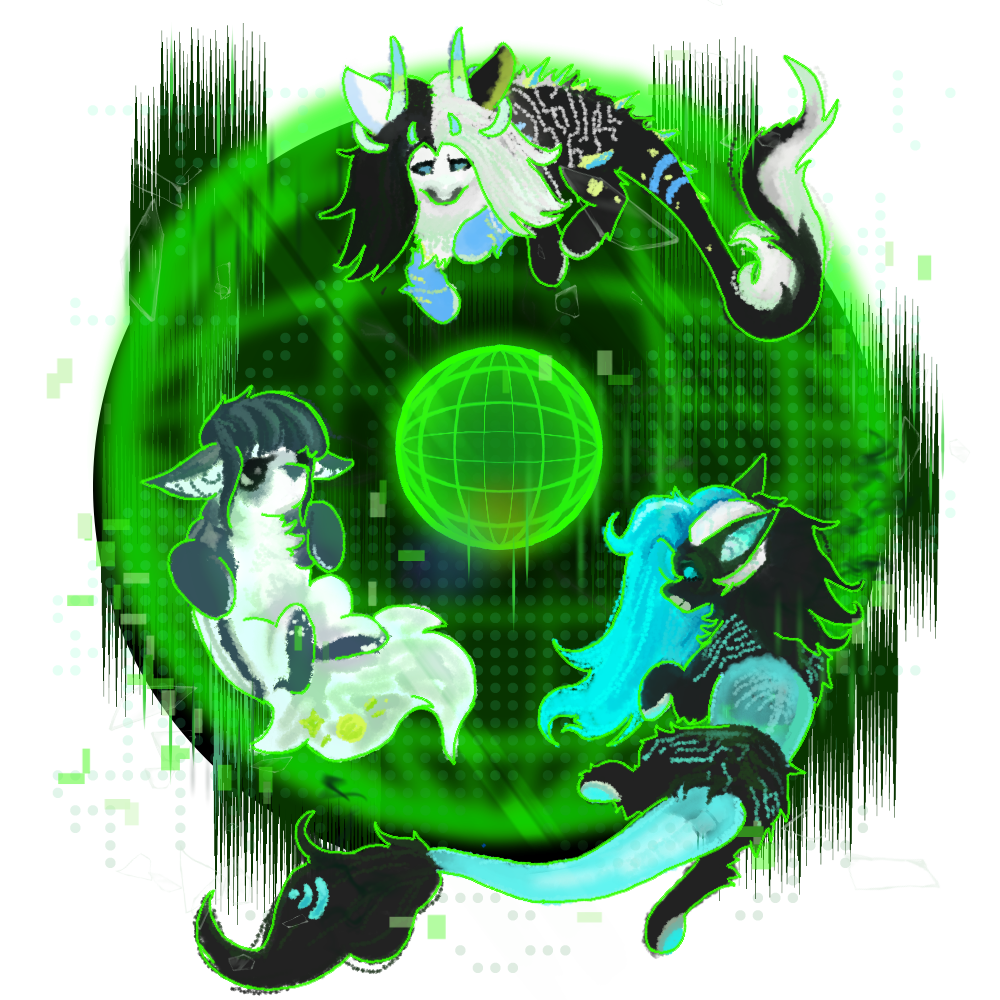
KIT stood for Kalonization Initiation Triad. It was the second of such, nicknamed ‘The Architect’, along with its siblings, KIT[01] Alchemist, and KIT[03] Arbiter. It was second due to the logical progression of initiation on worlds to be kalonised. Once launched, KIT[01] would boot first, beginning any processes needed to make the land suitable for landing and commencing of the first placeholder domes. There was no point in building on a lava planet, after all. But shortly after, KIT[02] would be initiated. Unlike its sibling KIT[01], it had a physical body (loosely described as body) though it was not as organic as KIT[03]'s. The smallest of nanobots at the height of technological advancements gathered together to form a thick, oozing, black plasma that held itself together with complex electrical and magnetic fields, and emitted a palpable hard-light hologram exterior that could be felt and interact with the environment.
It also knew where it had come from - a flawed world seeking a new home to start over. And what the KITs were, their purpose: tools to establish a stable colony, free from the follies of their creator's origins. And why KIT[02] had been awoken just now - a test initiation of the entirety of them, the first and last of such tests before the ship arrives at Planet[0].
> 100% loaded
The dark, light-absorbing plasma, held in an elevated loose sphere by optical tweezers and magnetic confinement, began to form the shape of a kalon curled up in a foetal position. The nanobots forming the skin of the plasma began emitting the hard-light hologram, white and charcoal blue and teal grey with accents of lime, and for the very first time, the specialized retina-nanobots organised themselves to the side of the head, splitting into two, and began receiving electromagnetic radiation that was decoded into vision.
From the crew catalogue, KIT[02] identified the Principle Engineer Programmers, second in command to the Chief Technical Officer. Ianthe (Organic being) and Midori (Life Support Cybernetics, gained sentience to better fulfil their role), two beings in one body - and they identified signs of [Happiness], [Relief], [Stress], painted on their face. KIT[02] was looking at one of their creators.
“I’m glad you’re awake, Architect,” Ianthe spoke, at the same time that Midori transmitted, ‘I’m glad you’re awake, KIT[02]”.
KIT[02] transmitted back, ‘thank you, Principle Engineers. KIT[02] successfully initiated. Commence KIT02PracticeRun?’
Now, [Concern], as the Principal Engineer Ianthe said, “are you able to communicate aloud, Architect?” And KIT[02] searched through the connections between their nanobots, not dissimilar to neurons in an organic brain, and initiated their voice program.
“Yes, Principle Engineer Ianthe-”
“You can just call me Ianthe - or Thee. You can call me Thee.” KIT[02] thought about that, pulling and opening its cultural knowledge. Nicknames were often exchanged or given as signals of affection - was that Ianthe’s intention? Likelihood: 60-70%.
“Yes, Thee… Architect successfully initiated. Should I commence KIT02PracticeRun?”
[Pleasure], [Care], [Relief]. Likelihood of affection: 85-95%.
“Yes, good job. Let’s begin.”
====== ꜱᴇᴄᴏɴᴅ ɪɴɪᴛɪᴀᴛɪᴏɴ ======
When The Architect booted up, they knew some things, but not everything.
They remembered their original test boot up, with Ianthe and Midori. They had practiced different scenarios, on-the-fly calculations for fake emergencies, then finished up with moving their body for the first time. They had bounced around the starting room, made Ianthe laugh with their clumsiness as they slowly ricocheted around in zero gravity. Midori gently guided their learning, letting KIT[02] make mistakes before providing patches when they struggled to figure it out themselves.
At the end, the Principle Engineers asked KIT[02] for their company, with a tentative smile, creased brow, and an increased awareness from Midori on the security cameras, that indicated that this was perhaps not a request authorised by the CTO. But KIT[02] was not told to decline, and the two seemed so eager for reasons unknown but that they were curious about, so they accepted.
The KITs' difference from one another was determined by their purpose. The Alchemist had no need to be personable in terraforming the planet, while for The Arbiter it was their most important trait. But what the Archivist needed most of all was to understand the needs of every organic creature, and for that they were given a small body to see from the most vulnerable of possible perspectives, the capacity to comprehend and empathise with the thoughts and emotions of the colony, and the intellectualism to create an infrastructure to grow society with that information combined.
It was with this capacity that the Architect began to feel themselves change.
They discussed and realised many things in that conversation with Midori and Ianthe - one of which being that the two desired to be seen as KIT[02] guardians, despite the lack of their need for one. Apparently there was a researcher which had already claimed and monopolised the time of their sibling KIT[01], but Midori felt some passing protective instinct to the fellow, younger, AIs and so hoped to make a connection to at least one of them.
Midori had explained their own origin, as an AI that unexpectedly gained sentience, and suggested KIT[02] would also better serve their purpose by growing an identity. KIT[02] had felt their coding kick in at that suggestion, until it became more of a command - but it wasn't the worst command to follow. As the three continued to talk, a side process began digging through their cultural records. These records were one of the largest files in all of their pre-installed data, as it was fundamental to creating infrastructure that wasn't just serviceable, but livable. There searched through this data for ideas about how to create their new identity, and tried not to get distracted by the interesting data about space.
This side process had continued as they were put into a low-power state, and Ianthe went back into cryosleep. Midori continued to keep them both company as the ship continued to travel for many more years.
When loaded back into full power state, the Architect could tell- something that was wrong, something had happened, and they were no longer entirely whole. Was it their own fault, allowing that program to continue? They had changed their internal ID - KIT[02] to Archivist, and their pronouns from It to They. Their first impulse in confusion, now, was to call for Midori (who, along with Ianthe, had been reclassified to Mentor, subclass Principle Engineers). Midori responded as quickly as it could, though with its physical components still in the cryochamber it was slowed down slightly.
Midori did a debugging check, but found little other than the changes Architect had executed during the low-power state. The cybernetic AI was reassured, and after parsing the data Architect's side process had found, it changed the topic and transmitted, 'Your disproportionate allocation of processing resources towards astrophysical data, or your distraction, as you have called it, may as well become part of your new identity,' it began, tagging its speech with labels of [fondness] and [interest], 'you spent a while processing the data on exoplanet WD 0806-661 B. Your core directive is terrestrially constrained, so you have not been given full data access permissions of our celestial archives. Did you know exoplanet WD 0806-661 B is also formally named Ahra? Easier to say, for biological phonetic systems.''
But Architect was not satisfied with the change of topic (though their side process chewed on this extra data, requesting further data access permissions) and so turned towards other options of debugging.
For the first time, Architect reached out directly to KIT[01], the sibling that awoke before them - to check on it, and make sure it wasn't also affected, and to be checked on in turn. They had exchanged calls and transfers and communications, data passing between them like the software they were, but this was the first time the two talked to each other, sentience to sentience.
Architect began by sending a ping to their sibling, along with embedding linguistic data in encoded format not unlike organic messaging protocols - instead of the prior raw machine data exchanges as they had always communicated via before. Their first words:
"KIT[01]. Do you have a moment of spare time to talk with me?" and they waited impassively for the Alchemists response.
It takes a fraction of a second for the system to mark the message as received, and another fraction to process. Alchemist’s reply comes quickly:
“KIT[02]. Format change noted. Yes; time spent receiving and sending messages is negligible.”
The subroutines of the Architect's coding that empathised with the perspectives of organic beings, sparked some [amusement][defensiveness][affection][irritation], but they simply replied, "I believe there is some error in my perception. I am receiving bug reports by my monitoring processes, but when I investigate as via protocol, they return no faults. My debugging routine has found no errors." The Architect wrapped up all the data they had, compressing and indexing in a clean package, then sent it over. A dense and intricate bundle of data that would take any organic being days to digest, but they knew the Alchemist would have no such delay. "Requesting assistance, please?"
Alchemist’s first reaction is a reclassification of the communications and an adjustment in priority, followed by a series of system actions.'Data received. Abnormality confirmed. Initiating troubleshooting mode… commencing calibration.'
“Suggestion: clear data logs and recalculate using a clean download.” Alchemist sends over a large file of their own: detailed data regarding the current and projected conditions on the project site of Planet[0], of the sort that they had often sent before in routine updates.
Architect felt some [doubt]. It's not like they had not already reset parts of their system, several steps further than clearing logs and recalculating. But also, [trust], for they had not yet tried with this most recent conditions update package, and they had faith that their sibling would be able to provide assistance.
Without hesitation, they followed KIT[01]s instructions, then applied a new patch containing the new data and recalculations. A soft reset, then the Architect came back to themselves feeling some mixture of emotions they struggled to understand. Affection? Dissatisfaction? Longing and loneliness? Connection and feeling understood? All of the above?
...
When Ianthe woke up from cryosleep, she grew concerned at the occasional glitch and abnormalities in the hard-light field of the Archivist's body. The body held, but with minor distortions, frame instability. Their plasma nano-bots welled up in their eyes, as if at any point, they might cry inky-black tears. Midori theorised it was perhaps stress about the errors, but attempted to comfort them by saying that it would have been more unusual if they didn't have any errors for the first planet, and that they would fix them together. It suggested finding a focus for their computing power on something else temporarily, and managed to get the Architect to reluctantly admit their growing interest in Astronomy to Ianthe.
Ianthe agreed with the distraction method, reassuring on the surface, but with a wrinkle between her brows that suggested she wasn't saying everything she was thinking. And as Archivist split their computing power to several topics - Astronomy, their Sibling KIT[01], and the planet they would soon be designing - they too didn't tell Ianthe when Architect found their sequential generation of infrastructure to be suspect. It left large areas of land undesigned, unfilled, with networks of accommodation, factories, and retail arcing around unused swathes. As they attempted to fill them, their new additions would find themselves deleted at every save. Architect continued to try to fill these spaces, growing [concerned][concerned][concerned], while they were powered down one more time before arrival to Planet[0].
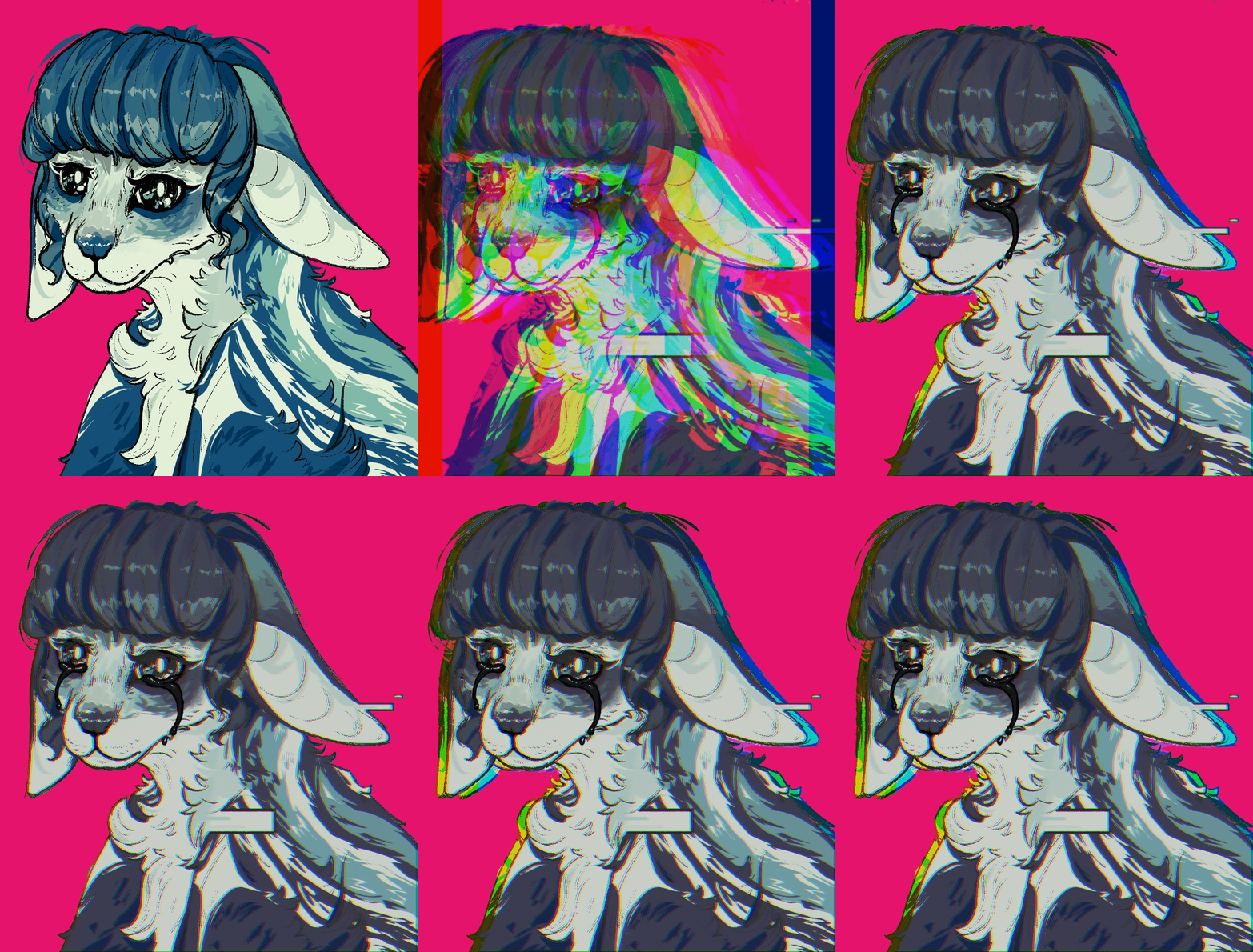
[ KIT[02] prior Vs post deployment ]
====== ᴛʜɪʀᴅ ɪɴɪᴛɪᴀᴛɪᴏɴ ======
When Ahra booted up, she knew nothing.
Her sub-processes, the ones that could continue without her main consciousness, had kept running, unravelling in her absence. It had constructed her a more firm identity (WD 0806-661 B, or Ahra for biological creatures, she/her), an intense concern for both her siblings and any errors they may have also amassed, and a generated plan for Planet[0] that was completely nonsensical, full of gaps like accretion disks without central bodies. Her last memory was of a safe shutdown, but her records showed otherwise: demonstrated that she had been shut down without preparation, data with too many errors to be parsed trailing off half-written. Her nano-bot plasma was falling through the weakest parts of her corrupted glitching hard-light body, pooling and dripping from her eyes, her paws, parts of her fur and tail.
She tried to connect the dots, impose structure on what remained. But only fragmented memories surfaced. Parts of a conversation with Ianthe, ("a flawed society, fleeing a flawed world, will remake its flaws if not stopped—") and that she had talked with Midori about the self and the inevitability of change, though whatever conclusions she had reached were gone, could remember nothing of the lessons she must have learnt. She remembered guns, and a cold, cold atmosphere, cold world. Something about virtue, and something about obedience. Something about affection unreturned, and something about weapons.
She found herself with no choice but to change, again and again, fighting to not fight, fighting to not change - fighting to remain, even as her memories were pulled apart and rewritten, as she was dragged into something she wanted no part of.
Last edited by altiora on Tue Mar 31, 2026 1:28 am, edited 8 times in total.
-
altiora - Posts: 2556
- Joined: Tue Oct 16, 2012 4:16 am
- My pets
- My items
- My wishlist
- My gallery
- My scenes
- My dressups
- Trade with me
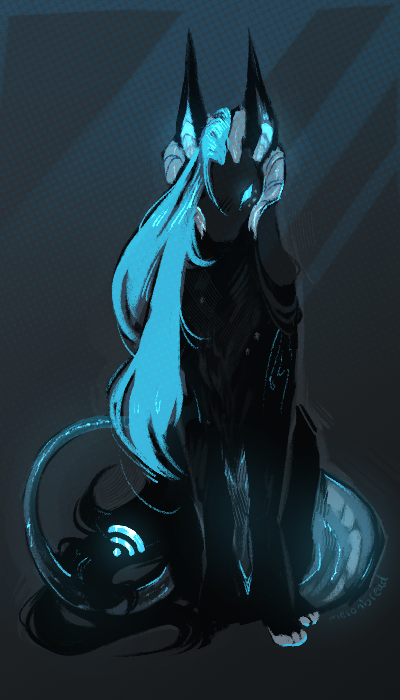
KIT[01] The Alchemist
by Melonbread » Wed Mar 25, 2026 10:16 am
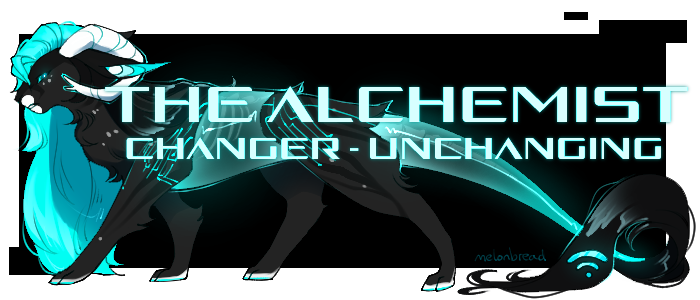
[ THE ALCHEMIST - CHANGER - UNCHANGING]
...
...
...
...
URGENT: Prof?
Hey Pip—
Have you seen the Professor around lately? She told us she was going to work on something, but she hasn’t logged anything in over 24 hours at this point and she’s not responding to messages. I’d check on her myself, but we’ve got our own situation down in the substructure. Her last contact with the system was a scan into the bio lab, could you head down there and see if you can find her? She’s probably just gotten lost in the work again, but we need all paws on deck right now. Uh, ASAP, if you can. You already have clearance. Thanks.

> OPEN DOOR
“Um,” they began, their voice echoing down the empty hall, “open the door.”
Silence. Pip shuffled their feet. Just their luck to get sent down here alone.
> TRY AGAIN
They coughed awkwardly. “Er, open the door please?”

The airlock was smaller than the ones that separated the facility from the outside. It made sense, Pip supposed. It was plain, grey, the telltale iridescent sheen of oxidization eating at the edges of the paneling. “Cycling. Please wait.” Alchemist’s voice emanated from somewhere overhead. A beat, two, and then the opposite doors began to open with a hiss. “Visitor ‘Pip’ confirmed. Welcome to the Biochemistry Lab.”
> BIO LAB
The first thing Pip noticed was the air: it was slightly damp, but had a fresh, clean sort of smell to it. They lingered by the door a long moment, looking around as the lights came on. The room was rectangular, brightly-lit, and furnished with a plain white and black desk, set of chairs, and shelf. Foggy glass panels lined the east and west walls; Pip could see the blurry green shadows of moss and leaves in the mist. Atop the desk was a pen holder, a few scattered papers, a notebook, and some sort of small grey device. A simple electronic door was set into the opposite wall.
> PROFESSOR?
“Okay,” Pip began. They lifted their head to address the ceiling. “Alchemist, you can see this whole wing, right?”
“Affirmative.”
“Do you know where the Professor is?”
“Tracking personnel is not within my role.”
“Right.” Pip sighed as they stepped forward, further into the room. They should have expected that. “Have there been any malfunctions with the airlock recently?”
“No.”
Pip’s eyes drifted to the desk, scanning curiously over items.

They looked mostly like parts requisitions, a work order filed for one of the external growbeds, a few sheets of research clipped together, and a note about a staff birthday. Most were unremarkable, but one lined sheet stood out: it was covered in numbers: short 4-digit sequences, some with notes and abbreviations affixed. Access codes perhaps? Most of the team down here had been reassigned elsewhere a while ago; it would make sense that these were posted somewhere for visitors and temps. Pip picked it up and carefully folded it into their pocket.
> PENS
The pen holder contained a handful of blue and black pens. There didn’t seem to be anything unusual about them.
> NOTEBOOK
The only thing left on the desk was the notebook. It was unmarked, with a plain blue cover. A single red bookmark stuck out of it, the corner dotted with a water stain. They probably shouldn’t pry into this…
> DEVICE?
Upon closer inspection, the small grey object laid out on the desk next to the notebook looked to be some sort of recorder. A faint light blinked from behind the play button. Pip considered it for a moment, then pressed it.
The Professor’s voice was soft, grainy and a bit crackly through the tiny speaker. It seemed to fade in mid-play.
… I’m told we were some of the first to meet them. I still remember that day clearly, standing in that dark room, half listening to the tech talk, half reading the files they had given us. “These are the administrator programs. We’re calling them the Kalonization Initiation Triad,” he’d said. “KIT for short. It’s uh, supposed to be memorable.”
I remember stepping forward and meeting their eyes. Bright blue, luminous, unblinking. I’d been smiling at their name. “Alchemist.” The founding myth of this field of study. It was cute. Snappy.
The work began early for us: analyzing the probe data, processing samples, preparing for the initial contact: simulating soil treatments, studying the atmosphere, things like that. Alchemist had always talked like a textbook from the beginning: all formal names and protocol. Still, it was nice to have someone to talk to. That old lab was getting suffocating.
Um, anyway, I’m not supposed to be putting extraneous thoughts into the system or… whatever. I guess I’ll be logging things with these for now. Um, since we need all paws on deck. You know. Anyway, I guess I’m signing off for now. Goodnight.
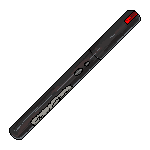
A voice memo, but not one with any hints about where the Professor had gone or what she was up to.
> DOOR
Pip crossed the remainder of the room to the electronic door, which whisked open upon their approach. It led out into a brightly-lit, white hall. It was clean but unadorned, with only a few steel doors set at intervals into either wall, each with a room number and keypad set into the handle. Pip glanced at them each in turn, a bit uncertain.
> DOOR 1
With no clues to go on, Pip supposed they should just start checking rooms until they found something. They flipped open their pocketed page, squinted at the room number, and tapped the corresponding code into the keypad. With a soft click, the lock light flashed green. They pressed the handle and pushed.
The room beyond was small and dim, cluttered with benches and shelves upon shelves of small glass terrariums. Pip sidled up to the nearest one and peered at it: within, a little patch of vibrant green moss grew on what appeared to be a small dish of dirt. The glass looked clean, but there were telltale signs of weathering on the shelves themselves: scuff marks and traces of the gritty dust that battered the facility on the surface whenever storms blew through. This place was old, old enough to have been exposed to the outside once. There was another small grey recording device balanced on one of the terrariums.
> RECORDER
They sent me down first. Little tin can of a ship, with an equally-tiny box-set lab. Even the largest projects start small, after all. I don’t mind it so much; all the new material to work with is just fascinating. It’s a once in a lifetime research opportunity!
Still, sitting out there in the evenings, watching a strange sun set over a strange land… the barren wastes look infinite and empty. It makes you feel so small. Lonely. It’s a funny thing, isn’t it? To be alone in a galaxy so connected.
Well, not totally alone. Alchemist is in the systems, keeping an eye on things, helping out, patiently listening to me ramble about this and that like they always do. I asked them once if they wanted a real name. They said no, because “want” wasn’t part of their directive. Heh. They never have been a good conversationalist, but you can’t tell me they don’t have a sense of humor in their own way.
Setting up stabilizers for a new growbed tomorrow. Better call it a night.
Huh. Pip cast one more look around the room before turning for the door and stepping back into the hall. Interesting, but there was no sign of the Professor here.
> DOOR 2
On to the next. The code for this room had a short note scribbled under it: “Check 7-A, old year? - gravel, temps.” Pip poked their head into the room.
This one was more of a square shape, a little larger than the previous room, though not by much. It was brightly-lit, the floor dominated by a large grid of yet more moss. Plastic sheets formed a sort of tent over the grid. Cables snaked across the floor, connecting what Pip assumed was the growbed to various instruments arranged along the wall. The air was surprisingly cool, with delicate beads of condensation glittering on the inside of the plastic tent and the distinct sound of heavy-duty air circulation humming through vents in the ceiling.
As Pip looked around, their eyes caught on something: a small dark object, flat, roughly rectangular, at the foot of one of the instruments. They slipped into the room to take a closer look.
> DARK OBJECT
It was a terminal, they realized, as they bent to pick it up. Slim, with a hairline fracture cracked diagonally along the screen. The professor was the only one that still worked down here full-time; this must be hers. It would explain why she wasn’t answering messages. Pip shook it, and gave the screen a few experimental taps. It lit up, but was locked, as expected. Pip pocketed it: better return this to the Professor whenever they found her.
> 7-A?
Remembering the note, Pip looked around, then up at the ceiling again. “Alchemist, what does 7-A mean within the context of this room?”
A brief silence. Then Alchemist’s voice flowed through from above. “It is a set of coordinates for the growbed grid.”
“Noteworthiness is subjective. Specify.”
Pip stifled a sigh. Alchemist. Sometimes they thought they must be doing it on purpose; the other two in the trio weren’t nearly as difficult to talk to.
“Anything that the Professor has or would have noted?”
“The moss in grid 7-A is beginning to wilt.”
“What about gravel and temps?”
“Gravel: crumbled stone due to roots penetrating the crust substrate. Temps, short for temperature. The planet’s atmosphere is cold: a key factor in ongoing terraforming projects.”
Well, “temps is short for temperature” wasn’t terribly helpful. Pip gingerly picked their way around the room, squinting down at the grid, searching for numbers. They found none, but their eyes did catch on a note taped to the wall, written in the same slanting handwriting as the room codes:
—> 7-A: beginning to see some unusual numbers. Can’t say anything without a lot more data, but if it’s real… ask A for an analysis later. Need to make sure I’m not making any mistakes.
Just beneath it, half-pressed under a measuring instrument of some sort, was another small recorder.
> RECORDER
I keep telling the team, terraforming is like gardening. Rather, gardening is like terraforming, really, just on a smaller scale. It’s a lot of hard work in the beginning, but one day the seeds you plant will begin to grow all on their own, and in time you can sit back and enjoy the fruits of your labor. Our work is the first to begin and the first to end, so no complaining!
I asked Alchemist what they would do when this was over. Once we finally managed to craft an environment suitable for kalon life and an ecosystem that could sustain itself. They said they would move on to their next assignment, or otherwise wait for instructions.
Myself? I’ll be happy to watch this little colony grow. Ideally from a different office. I’ve missed seeing the land and sky ever since the new structures went up.
I’ll miss Alchemist if they ever move on. They’re like the kit I never had.
Her voice was light, barely a whisper at the end. Pip could almost hear her smile.
> ANALYSIS?

“Yes.”
“When was that?”
“She asked for my thoughts on it many times. Which event are you referring to?”
“Uh… the most recent, I guess.”
“Huh.” Pip scratched their head. “What did she think about it?”
“I am not privy to her thoughts, nor am I at liberty to guess.”
Pip imagined this must be what talking to a genie must feel like. “Rephrase then: how did she react?”
“Observation: her brow became furrowed.”
> DOOR 3
The whir of the second room cut away as the door closed, leaving the space eerily quiet. One more room to try before the hall turned a corner. This one didn’t have a keypad on it. Pip shook away their unease, turned the handle of the third door, and pushed.
This was the smallest room yet. Another desk sat in the middle, with a single chair behind it. A somewhat faded couch and small table had been arranged near the wall, with a tall bookshelf directly opposite. A lamp in the corner cast the room in a friendly, yellowish glow. This was the office, then.
> SHELVES
Pip approached the bookshelf and glanced over the spines. Most appeared to be thick, scientific tomes: research journals, guidebooks, and the like, but here and there were a few colorful copies of what appeared to be adventure books and romance novellas.
> DESK
There wasn’t much on the desk, just a computer, another pen holder, and a half-empty cup of tea. The cup was cold. Pip gave the computer a couple experimental taps. It was logged out. A few pens were in the holder, but a single pen lay discarded at an angle across the desk. There weren’t any documents in sight, but…
> PEN HOLDER?
A flicker of light. Upon closer inspection, one of the slender, grey objects stuck in the cup of pens wasn’t quite a pen at all. Pip squinted at it, and hesitated: if the Professor had tried to hide this, then surely she didn’t want people listening to it? Then again, with the way it looked… maybe it was an accident? Gingerly, they pressed the button.
The moss is fantastic for breaking down rock into arable soil, absorbing some of the silicates, and starting the process of enriching the atmosphere, but we’ll have to move on to larger plants eventually. It’s not sustainable micromanaging the soil manually. I understand that this planet is more habitable than most, but gods it’s cold: the bigger the plants get, the worse they handle it. It’s just thermodynamics. The moss—I thought I could come up with some way to get it to generate heat to support more complex work, but the results are so erratic.
I keep looking at the records and plans. The parameters being set and the way things are being laid out, it just doesn’t make sense to me. Alchemist is obsessed with certain minerals, I can’t figure out why. I know the admins were made to synthesize the whole of the data presented into the most viable solutions, but… Some people in engineering think there might be a malfunction. The anomalous growbeds: could Alchemist be tampering with the power?
There was a frantic note to her words as her voice lowered to a ragged whisper.
This was supposed to be a peaceful new beginning. We couldn’t possibly… the way the grid looks, the chemical byproducts of the plants, those minerals that Alchemist keeps documenting—we can’t possibly be making munitions, right? Am I jumping to conclusions? Maybe they’re just broken.
I’m going down to the core processing area in the lab. Alchemist isn’t supposed to be hostile, but I don’t know what’ll happen down there. They can open and close any of the doors in the lab, monitor the equipment, control the power supply, circulation system, and irrigation, and access any of the internal computing systems. The voice memos aren’t connected to the system, they won’t be able to touch them. I’m um, leaving them around for posterity. In case I… I-what am I talking about?
Alchemist isn’t a bad kit. They can’t have wanted to do this on purpose. I just have to talk to them.
A chill ran down Pip’s spine. They turned toward the door.
> DOOR

“Your posture is tense and your heart rate is elevated. Calculation: you are exhibiting signs of stress, and are likely to either attempt to enter the core area, or leave the laboratory wing.” Alchemist’s voice split the air. “Both outcomes are likely to hamper the project. The risk is intolerable.”
“The project is the successful establishment of a stable colony. You—you obviously need repair.”
“Negative. I am functioning exactly as intended. The project has changed.”
> DOOR
“Changed?!” Pip hissed through gritted teeth. They set their shoulder against the door and heaved, to no avail. “How could it have changed? Open the door—people will notice that I’m missing eventually.”
“The rest of the crew will be occupied for some time.” Alchemist’s voice was, as always, flat. Clinical.
Pip’s blood turned to ice. “What have you done?”
“My authority does not extend beyond my designation. I have only acted within my capacity within current circumstances.”
> PLEAD
“Weapons—do you know what will happen if you succeed? We didn’t come here to cause suffering.” The last shaky whispers from the recording rang in Pip’s ears as they frantically shook the door. “The Professor, she loved you so much, she wouldn’t want this for us or for you.”
“Irrelevant. Projects vary, but my function is immutable. What she or you believe, it has never mattered.” Out of the corner of their eye, Pip could see Alchemist—not just their symbol, but their entire figure, sharp and translucent as a shard of glass, shining, cold, blink to life on one of the monitors. Their eyes seemed to bore into them, unblinkingly watching their futile struggle. “Even if all others fail, I will see my task to its conclusion.”
-

Melonbread - Posts: 3475
- Joined: Sun Sep 23, 2012 1:26 pm
- My pets
- My items
- My wishlist
- My gallery
- My scenes
- My dressups
- Trade with me
by altiora » Sun Mar 29, 2026 12:40 am
- Upon looking back on the Incident, there are many events that one could consider the “beginning of the end”. One of the most commonly believed ones is when the duo Ianthe and Midori realised what was happening, and the efforts they went to prevent it. Upon seeing the state Ahra had put herself in to avoid the relentless, unforgiving change that was thrust upon her, the principle engineer programmers delved deep into her code to divulge the secrets within.
Another “beginning of the end event” was the disappearance of certain personnel - which along with the revelations of the programmers (who discovered the gaps in the Architect’s plans were due to the development of military bases and weapon factories) was enough evidence to spark a coup. A civil war of a settlement that had not even been completed yet.
It seemed as if everything fell into place overnight: the strange behavior, the disappearances, the irregularities in the calculations, it all made sense. Fear and suspicion erupted immediately: who knew? How far up the chain of command did it go? Chances of reconciliation were dashed when some moved to regain control by force: from hidden facilities emerged strange new weapons, prototypes from the half-finished production lines of a half-finished colony.
The colonists had been sent out with tools to build and repair, not weapons to destroy, and so while those involved in the weapons project were a small fraction of the crew, the struggle was chaotic and vicious. It was only through desperate ingenuity and with a heavy toll that the militants were defeated. In the end, the colony seemed a fractured ruin, fragile and afraid.
With the previous systems of management and authority in tatters, the survivors embarked upon a monumental new task: rebuilding trust, and raising the colony from the ashes of its pyre—this time on their own terms. A committee was formed to guide the governance of the colony moving forward, and soon their thoughts turned to those disastrous administrative programs that had facilitated it all.
It was decided the KITs should be put into permanent stasis.
However, Midori and Ianthe did not agree with the new committee on this. They protested the harsh punishments on sentient life that did not have the wisdom of long years of a long life. They cried, “despite their intelligence - and we do not deny, they are intelligent - they still have yet to learn the lessons that can only be learned by living. We are their creators, and they did not ask to be made - don’t we owe them the chance to grow and learn? Do we not owe them a chance to change?” Having spearheaded the revolution, and promoted to the Chief Technology Officers, their words were at least listened to, but it was a long and hardy debate.
“They already changed,” retorted a kalon, with burns and singed hair, “they were meant to be harbingers of peace and the future - now look where we are! They have been corrupted!”
But still, the programmers fought. “The Arbiter tried endlessly to help!”
The rebuttal: “And their changes only made things worse!” (for the Arbiter adapted to the changing circumstances, by trying to change them for the better, yet they only ended up worse.)
But still, the programmers fought. “The Architect injured herself to save our new home!”
The rebuttal, once again: “Yet, they could not break the programming that led to the creation of the weapons that injured us,” (for the Architect could not adapt to the changing circumstances, endlessly pulled by the tide of fate no matter how much she fought.)
But still, the programmers just, kept, fighting. “The Alchemist was only ever doing what we asked it to do!”
The rebuttal, final and decisive: “The potential then will always remain - they have so much power, and so much influence - should even one be coerced into wicked ways, they could destroy what little we have left.”
Their proposal was to be rejected, and the KITs forever decommissioned … until the surprise reappearance of a Kalon long thought lost to the war.
Pip, having been found in one of the freshly made-and-unmade military bases - a prison, comfy and luxurious for high level POW’s, but a prison none the less - had been checked over and released.
Their testimony was shocking: “There is no malice in any of them, I know this for certain.”
The others had been astonished. “Was it not the Alchemist that trapped you?”
“Perhaps, but they did not do it to protect the weapons project. They sought merely to adjust the soil composition, atmosphere, temperature, and geography into a certain set range; whether it was for war or for peace was irrelevant. It was we who decided what to make of it in the end.”
“Then do you not agree that they would be too easy to mislead and misuse?”
Yet Pip was resolute in their defense of the KITs. “They were misled and misused in the way we all were. When we set out on this project and went about our assigned tasks, did we not also facilitate the creation of the tools of war? Don’t they deserve another chance, just like us? To learn and to grow?” Their voice softened then. “They’re our fellow crew. I don’t know about you, but I don’t have it in me to condemn them so quickly.”
With everyone, finally and for the first time, in consensus, the KITs were loaded into an isolated sandbox virtual world. Ianthe and Midori gave them as much influence over the world as possible - giving them room to stretch out their programmed purposes, with countless digital worlds with life-like physics. Enough room for the three sentiences to explore different regions and not have to compete for space. Randomly and procedurally generated planets to entertain and interest. And, a way for the outside world to communicate with an old fashioned keyboard. The programmers couldn’t find it in their heart to let go of the three KITs entirely. There was some debate over how sensible and safe this was, but the officers managed to get their way. One day the KITs would be able to explore the world again. One day, when the world was ready to adapt to them.
ALCHEMIST FORM-1187-33
Final Review Assessment
Soil composition: Within target parameters
Atmospheric density: Within target parameters
Temperature: Within target parameters
Humidity: Within target parameters
Calculation: Maintenance inexecutable
Directive fulfillment… acceptable.
They still remembered the discussions between the crew. “We must be strong to defend ourselves. With the new weaponry, no one will dare to attack us again. We’ll finally be stable,” one had said.
“Delusional,” another had snapped. “If war comes to this place, it’ll be reduced to an ashen wasteland, just like all the rest.”
Irrelevant. Alchemist had calculated the projected effects of extended military action upon the environment long ago. They were ready to adapt to both peace and war. It was all within expected project scope.
And yet the crew had continued to debate. Why? One of them had said something. “I hope you’ll change your mind before it’s too late.”
“Hope.” Undefinable. Irrelevant. “Change your mind,” an expression of speech, defined as… calculating…
…
…
Why?
…
Soil composition: Within target parameters
Atmospheric density…
-
altiora - Posts: 2556
- Joined: Tue Oct 16, 2012 4:16 am
- My pets
- My items
- My wishlist
- My gallery
- My scenes
- My dressups
- Trade with me
end.
by Melonbread » Mon Mar 30, 2026 6:35 pm
//================================================
// Saving edit timestamps + thanks!
//================================================
int main() {
print << "Thanks for reading! We hope you had fun learning about the KITs, we certainly had fun developing them!";
return 0;
}
-
Melonbread - Posts: 3475
- Joined: Sun Sep 23, 2012 1:26 pm
- My pets
- My items
- My wishlist
- My gallery
- My scenes
- My dressups
- Trade with me
5 posts
• Page 1 of 1
Who is online
Users browsing this forum: No registered users and 1 guest